SmartPawsGuides, comparisons & trusted resources — Guides & trusted resources — always independent.

Best Cats for
First-Time Owners
Five breeds that forgive beginner mistakes, adapt to apartment living, and build genuine bonds with their owners — with honest notes on what each one actually requires.
How We Chose These Breeds
First-time cat owners benefit most from breeds that are forgiving of inexperience, adaptable to apartment living, and genuinely affectionate without being high-maintenance. We evaluated each breed on four criteria: temperament stability (how predictable their personality is), grooming requirements, health robustness, and tolerance for the realities of a first-time owner's life — occasional schedule changes, learning proper handling, and the inevitable mistakes of someone new to cat ownership.
Every breed on this list has genuine Watch-Out notes. No cat is maintenance-free, and honest guidance about what each breed actually requires is more useful than a list of positives. The Siamese is rated Intermediate rather than Beginner because their vocal intensity and attachment needs genuinely require an owner who understands what they're signing up for.
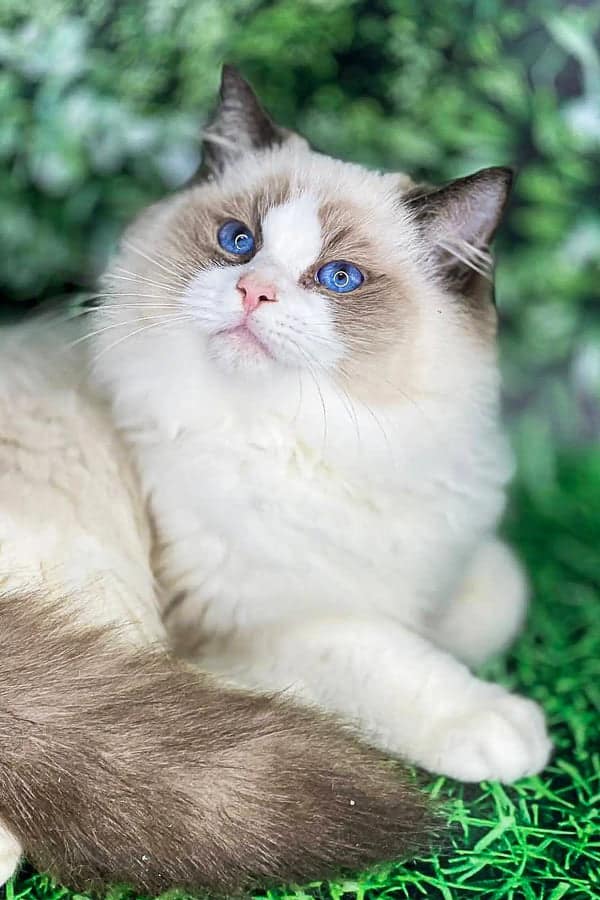
Ragdoll
The lap cat that goes limp in your arms.
California, USA
12–17 years
10–20 lbs
Moderate (weekly brushing)
Quiet to moderate
Ragdolls are the gold standard for first-time cat owners. They earned their name because they go limp like a ragdoll when picked up — a trait that makes them exceptionally gentle and easy to handle. Unlike many cats, Ragdolls actively seek out human company, following their owners from room to room and greeting them at the door. They rarely scratch or bite, even when startled, making them ideal for households with children or other pets. Their semi-long coat is surprisingly low-maintenance for its length — the texture resists matting better than most long-haired breeds. The one honest caveat: Ragdolls are social cats that don't do well with long hours alone. If you work long days, consider adopting two so they have company.
Best For
- First-time cat owners
- Apartment living
- Families with children
- Multi-pet households
Watch Out
- Needs daily interaction — not suited for owners away all day
- Long coat requires regular brushing to prevent mats
- Prone to HCM (heart condition) — annual vet checks recommended
Fun fact: Ragdolls are one of the few cat breeds that will often play fetch — and come when called, more like a dog than a cat.
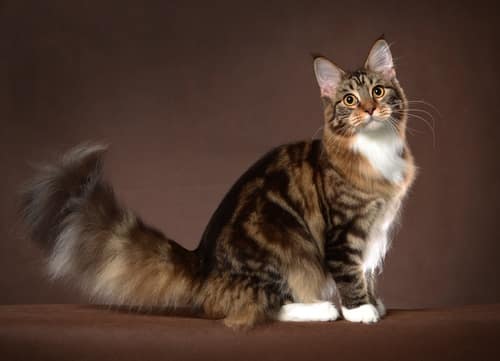
Maine Coon
The dog of the cat world — loyal, playful, and surprisingly trainable.
Maine, USA
12–15 years
9–18 lbs
Moderate (2–3x per week brushing)
Moderate (chirps and trills)
Maine Coons are often described as 'the dog of the cat world' — and it's an accurate description. They're loyal, playful, and genuinely enjoy being part of family activities rather than watching from a distance. They're one of the most trainable cat breeds, learning tricks, walking on a leash, and playing fetch with ease. Their size (males regularly reach 15–18 lbs) can be surprising to first-time owners, but their temperament is gentle and patient. Maine Coons are particularly good with children because they're sturdy enough to handle enthusiastic handling and patient enough not to react badly to it. Their thick, shaggy coat needs brushing 2–3 times a week to prevent tangles, but they generally tolerate grooming well.
Best For
- Active households
- Families with children
- Dog owners who want a cat
- Owners who enjoy interactive play
Watch Out
- Largest domestic cat breed — needs space to move
- Prone to hip dysplasia and HCM — health screening recommended
- Thick coat requires regular brushing, especially in spring shedding season
Fun fact: Maine Coons are one of the only cat breeds known to enjoy water — many will splash in their water bowl or join their owners in the shower.
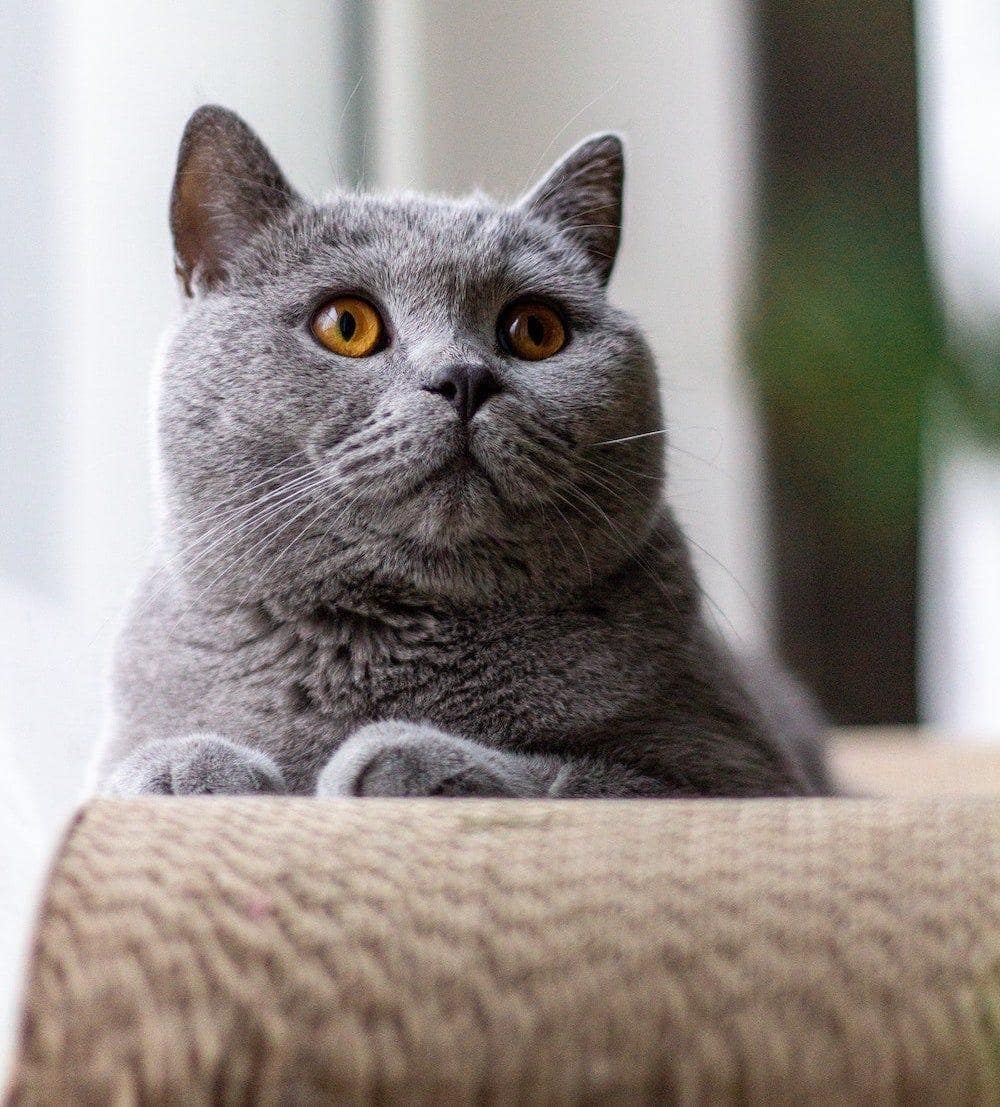
British Shorthair
Calm, independent, and endlessly easygoing.
United Kingdom
12–20 years
7–17 lbs
Low (weekly brushing)
Quiet
The British Shorthair is the ideal cat for owners who want a calm, low-drama companion that doesn't demand constant attention. They're affectionate but not clingy — they'll sit near you on the sofa rather than on your lap, and they're content to entertain themselves when you're busy. Their dense, plush coat is one of the lowest-maintenance of any medium-length coat — it doesn't mat or tangle easily and only needs weekly brushing. British Shorthairs are exceptionally tolerant of change, handling new environments, new people, and schedule changes with equanimity that most cats don't have. They're also one of the longest-lived cat breeds, with many reaching 15–20 years. The one thing to watch: they love food and will overeat if given the chance, so measured feeding is important.
Best For
- Busy owners
- Apartment living
- Owners who travel occasionally
- Quieter households
Watch Out
- Less affectionate than Ragdolls — prefers to be near you rather than on you
- Prone to obesity — monitor food intake carefully
- Slow to mature — full adult temperament develops around age 3
Fun fact: The British Shorthair is believed to be the inspiration for the Cheshire Cat in Alice in Wonderland — Lewis Carroll likely based the character on a British Shorthair he knew.
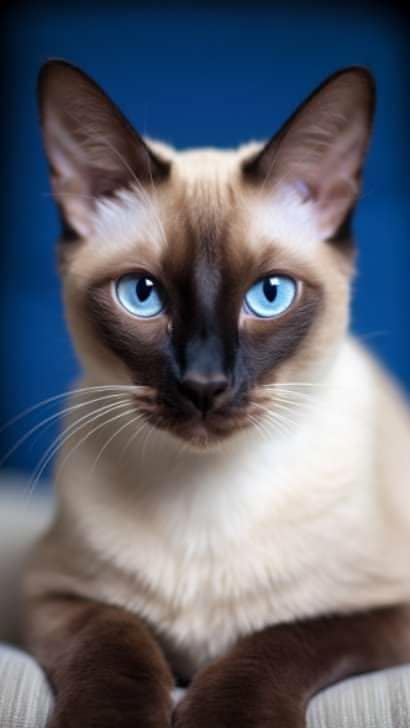
Siamese
Vocal, social, and deeply bonded to their person.
Thailand (formerly Siam)
12–20 years
6–14 lbs
Very Low (short coat, minimal shedding)
Very High (loud and persistent)
Siamese cats are rated 'Intermediate' not because they're difficult, but because their personality is intense — and first-time owners should know what they're signing up for. A Siamese is not a background cat. They will follow you from room to room, demand to be part of every activity, and vocalize loudly when they want attention (which is often). Owners who work from home and want a deeply bonded companion find Siamese cats extraordinary. Owners who want a calm, quiet cat will find them exhausting. On the positive side, their short coat is virtually maintenance-free, they're one of the healthiest cat breeds with fewer genetic issues than most purebreds, and their intelligence makes them highly trainable. If you want a cat that acts more like a dog in terms of attachment and interaction, the Siamese delivers.
Best For
- Owners who work from home
- People who want a highly interactive cat
- Experienced cat owners
- Households without noise sensitivity
Watch Out
- Extremely vocal — will 'talk' loudly and persistently, especially when bored or hungry
- Separation anxiety is real — not suited for owners away 8+ hours daily
- Highly intelligent and mischievous — will open cabinets, doors, and get into everything
Fun fact: Siamese cats are one of the oldest recognized cat breeds in the world — they appear in Thai manuscripts dating back to the 14th century.
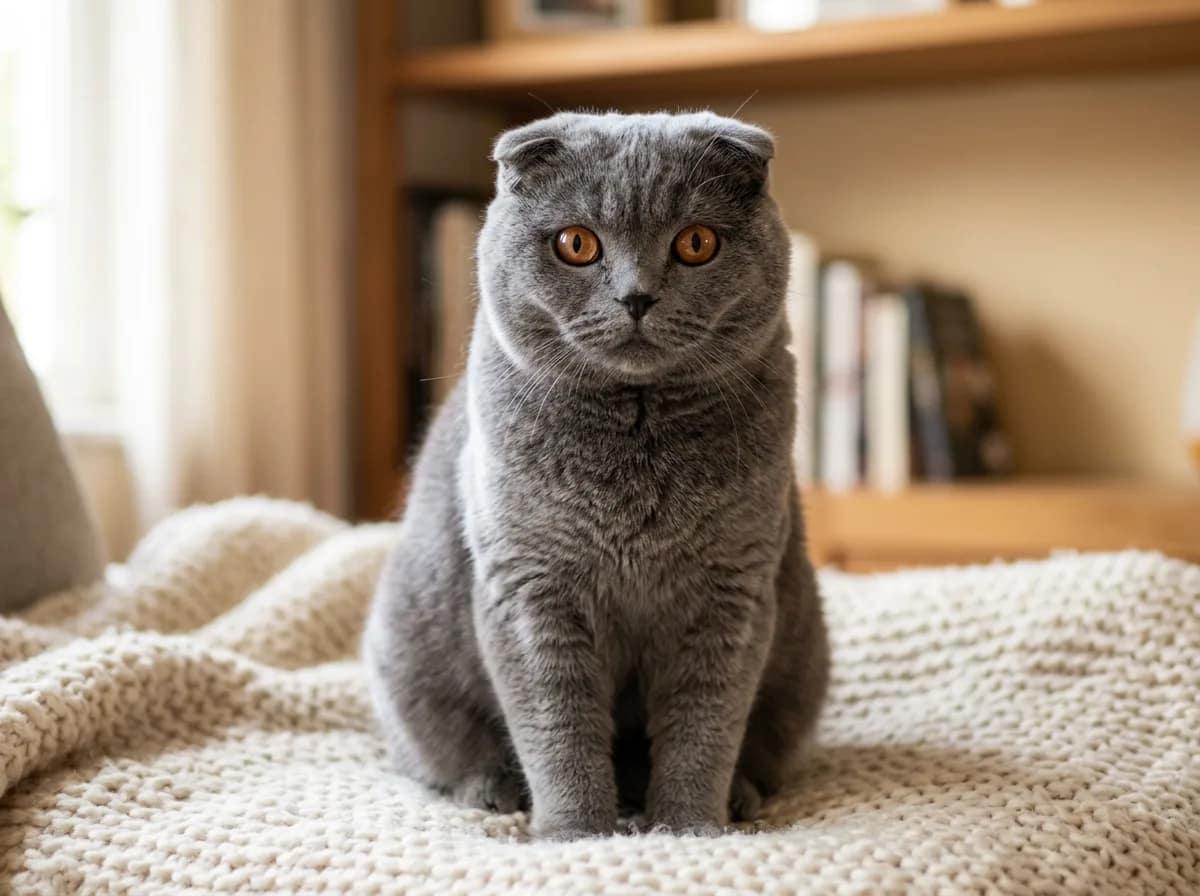
Scottish Fold
Owl-faced, sweet-natured, and endlessly adaptable.
Scotland
11–15 years
6–13 lbs
Low–Moderate (weekly brushing)
Quiet to moderate
Scottish Folds are immediately recognizable by their distinctive folded ears, which give them an owl-like appearance. Their temperament matches their look — calm, observant, and adaptable. They're one of the most easygoing cat breeds, handling new environments, children, and other pets with minimal stress. Scottish Folds tend to bond closely with their primary person while remaining friendly with everyone in the household. They're quiet, rarely destructive, and content in apartments. The important caveat for prospective owners: the gene that causes the folded ears also affects cartilage throughout the body, and poorly-bred Scottish Folds can develop painful joint conditions. This makes choosing a reputable, health-testing breeder non-negotiable. A well-bred Scottish Fold from a responsible breeder is a wonderful, healthy companion; a poorly-bred one may develop chronic pain.
Best For
- Apartment living
- First-time owners
- Families with children
- Multi-pet households
Watch Out
- Genetic health concern: the fold gene can cause osteochondrodysplasia (joint pain) — buy only from reputable breeders who health-test
- Prone to ear issues due to folded ear structure — regular ear cleaning required
- Some countries have restricted or banned breeding due to welfare concerns — research your local regulations
Fun fact: Taylor Swift's cats Olivia Benson and Meredith Grey are Scottish Folds — and have been credited with a significant spike in breed popularity in the 2010s.
Not sure which breed is right for you?
Browse all 61 cat breeds with filters for apartment living, hypoallergenic, kid-friendly, and more.