SmartPawsGuides, comparisons & trusted resources — Guides & trusted resources — always independent.

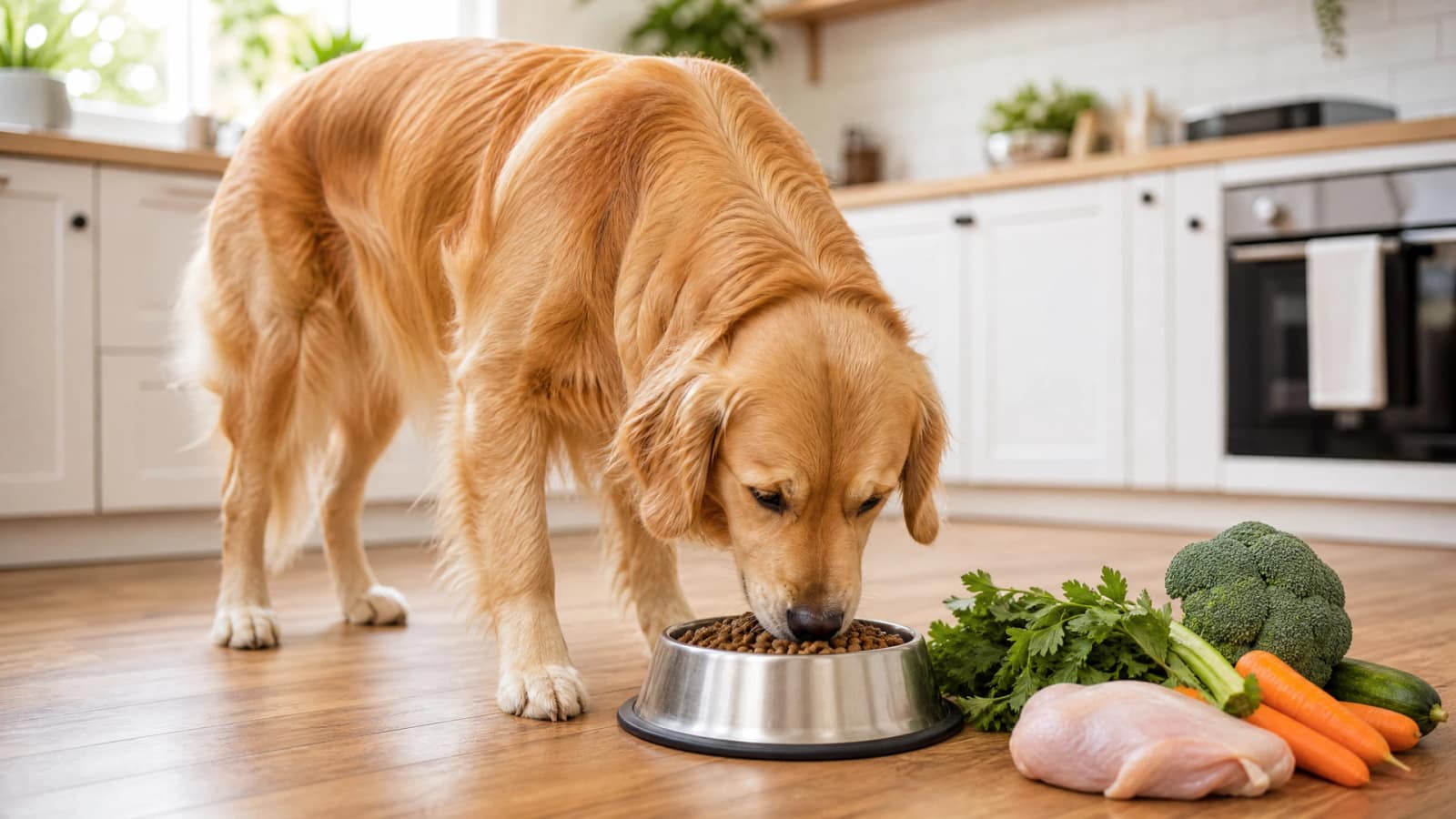
Dog Nutrition Guide: What to Feed, What to Avoid, and How to Read a Label
By John Choi · SmartPaws author
Most dog food marketing is noise. Here's what actually matters for your dog's health — ingredients, life stage, portion size, and the questions worth asking your vet.
General Education Only
This article is for general educational purposes and does not constitute veterinary advice. Every pet is different — consult your veterinarian before making changes to your pet's diet, health routine, or supplement regimen. If your pet shows signs of illness, contact a licensed veterinarian promptly.
Walk down the pet food aisle and you'll see words like 'ancestral,' 'holistic,' 'biologically appropriate,' and 'grain-free' on nearly every bag. None of these terms are regulated by the FDA or AAFCO. They're marketing language. This guide cuts through the noise and focuses on what actually matters for your dog's health: nutritional completeness, ingredient quality, life stage appropriateness, and portion accuracy.
The AAFCO Statement: The Only Label That Matters
The Association of American Feed Control Officials (AAFCO) sets minimum nutritional standards for dog food. Look for one of two statements on the label: 'formulated to meet the AAFCO Dog Food Nutrient Profile' (computer-calculated) or 'animal feeding tests using AAFCO procedures substantiate' (actually fed to dogs in trials). The second statement is stronger evidence of nutritional adequacy. If a food doesn't have an AAFCO statement at all, don't buy it.
Life Stage Matters More Than Brand
Puppies, adults, and senior dogs have meaningfully different nutritional needs. Puppy food has higher protein, fat, calcium, and phosphorus to support growth. Large-breed puppies specifically need controlled calcium levels to prevent developmental bone disease — do not feed a large-breed puppy a standard puppy food without checking the label. Senior dogs often benefit from reduced calories and added joint support. 'All life stages' foods are formulated to puppy standards and may be too calorie-dense for adult dogs.
Reading an Ingredient List
Ingredients are listed by weight before processing. A named protein source (chicken, beef, salmon) as the first ingredient is a good sign. 'Meat meal' (chicken meal, turkey meal) is a concentrated protein source and not inherently inferior to fresh meat — it's actually higher in protein by weight after moisture is removed. Avoid foods where the first several ingredients are grains or where the protein source is vague ('meat,' 'poultry'). Artificial colors and preservatives (BHA, BHT, ethoxyquin) are worth avoiding when alternatives are available.
The Grain-Free Warning
In 2018, the FDA began investigating a potential link between grain-free diets high in legumes (peas, lentils, chickpeas) and dilated cardiomyopathy (DCM) — a serious heart condition — in dogs. The investigation is ongoing and causation has not been definitively established, but the FDA has identified hundreds of cases. Until the research is conclusive, most veterinary cardiologists recommend caution with grain-free diets, particularly for breeds already predisposed to DCM (Dobermans, Boxers, Great Danes, Cocker Spaniels).
Portion Size: The Most Overlooked Factor
Obesity is the most common nutritional problem in dogs — an estimated 56% of US dogs are overweight or obese. The feeding guidelines on dog food bags are starting points, not prescriptions — they're often generous because manufacturers want you to use more food. Your dog's body condition score (BCS) is the real measure. You should be able to feel your dog's ribs easily without pressing hard, but not see them. Adjust portions based on BCS, not the bag. Measure food by weight (grams) rather than volume (cups) for accuracy.
Foods That Are Toxic to Dogs
Several common human foods are toxic to dogs and should never be given: grapes and raisins (kidney failure, even small amounts), xylitol (found in sugar-free gum, peanut butter, and many baked goods — causes severe hypoglycemia and liver failure), onions and garlic (damage red blood cells), macadamia nuts (neurological symptoms), chocolate (theobromine toxicity), and alcohol. Keep these out of reach and know the ASPCA Animal Poison Control number: 888-426-4435.
The best brands for most dogs: Royal Canin, Hill's Science Diet, and Purina Pro Plan consistently earn the highest marks from veterinary nutritionists for research investment, quality control, and nutritional adequacy. They're not glamorous, but they're backed by more feeding trials and nutritional research than most boutique brands.
The Bottom Line
Choose a food with an AAFCO feeding trial statement, appropriate for your dog's life stage, from a brand that employs veterinary nutritionists and conducts feeding trials. Measure portions accurately and adjust based on your dog's body condition. Avoid grain-free diets until the DCM investigation is resolved. And when in doubt, ask your veterinarian — they know your dog's individual health needs.
Keep reading
You might also like

Crate Training a Puppy: The Complete Step-by-Step Guide
Crate training is one of the most valuable things you can do for a new puppy — but only when done correctly. A rushed or punitive approach creates anxiety. A patient, positive approach creates a dog who genuinely loves their crate.
Read guide
Dog Dental Health: Why It Matters More Than You Think
Most dog owners skip dental care until there's a vet bill. By then, the damage is already done. Dental disease doesn't just cause bad breath — it causes pain, tooth loss, and bacteria that enter the bloodstream and damage the heart, kidneys, and liver.
Read guide
How Much Exercise Does Your Dog Need? A Breed-by-Breed Guide
A Labrador and a Basset Hound have almost nothing in common when it comes to exercise needs. Getting this wrong in either direction — too much or too little — causes real problems. Here's how to get it right.
Read guide