SmartPawsGuides, comparisons & trusted resources — Guides & trusted resources — always independent.

Crate Training a Puppy: The Complete Step-by-Step Guide
By John Choi · SmartPaws author
Crate training done right makes your puppy feel safe, not punished. Here's the exact process — from first introduction to sleeping through the night.
Crate training is one of the most misunderstood aspects of puppy ownership. Done correctly, a crate becomes your puppy's safe haven — a place they choose to rest, decompress, and feel secure. Done incorrectly, it creates anxiety and behavioral problems that can last years. This guide walks you through the exact process, week by week, from first introduction to sleeping through the night without a sound.
Why Crate Training Works
Dogs are den animals by instinct. In the wild, dogs seek out small, enclosed spaces to sleep and feel safe. A crate mimics that instinct when introduced properly. Beyond comfort, crate training prevents destructive behavior when you can't supervise, accelerates house training by teaching puppies to hold their bladder, and gives your dog a predictable safe space during stressful events like thunderstorms or vet visits.
Choosing the Right Crate Size
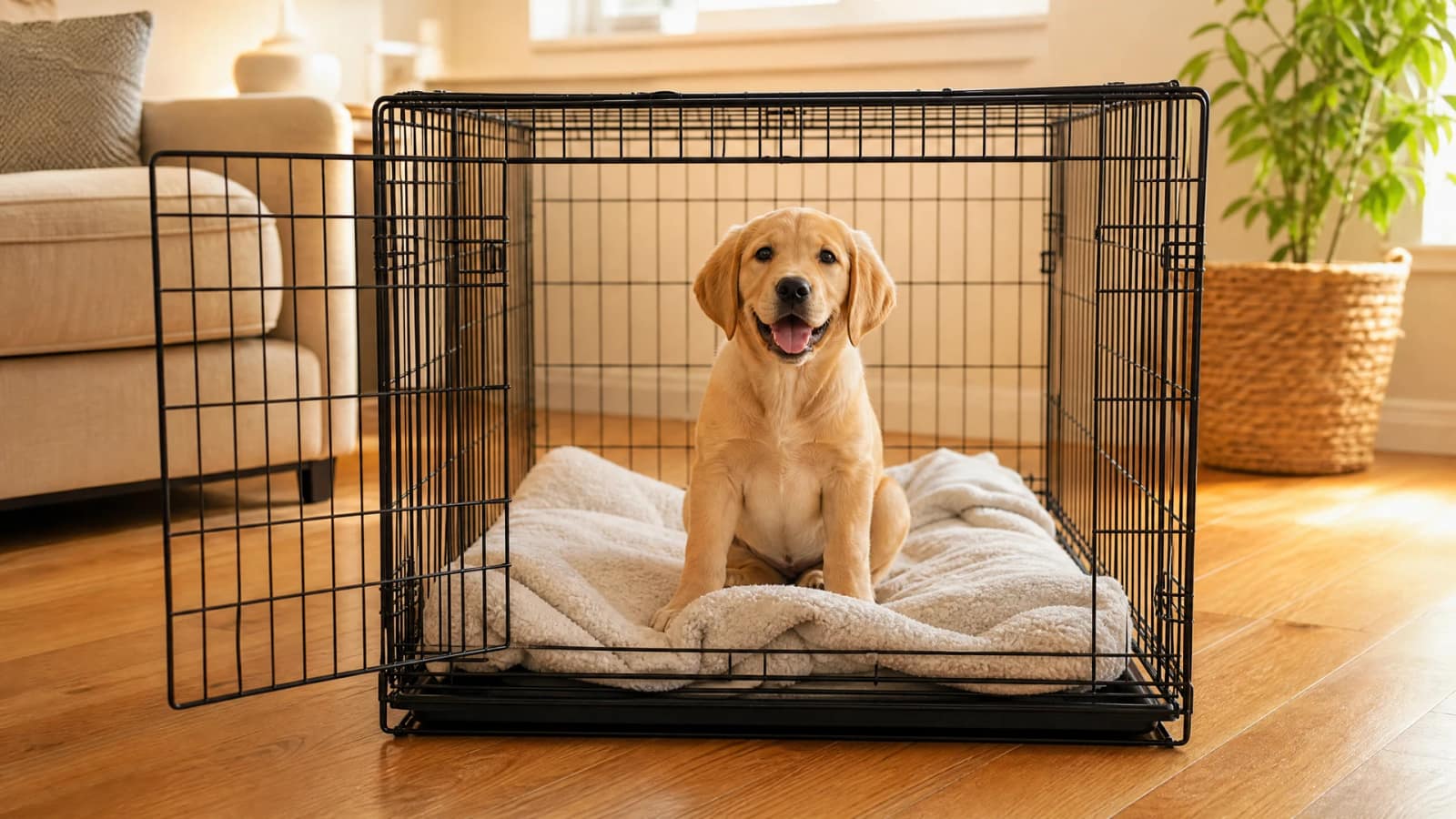
The crate should be large enough for your puppy to stand up, turn around, and lie down comfortably — and nothing more. Too large and your puppy will use one corner as a bathroom. If you have a large-breed puppy, buy a crate with a divider panel so you can expand it as they grow. Wire crates with dividers are the most practical and cost-effective option for most puppies.
Week 1: Introduction Without Pressure
Place the crate in a busy area of your home — not isolated in a laundry room. Leave the door open and let your puppy explore it freely. Toss treats and kibble inside throughout the day. Feed meals near the crate, then inside it with the door open. Never force your puppy in. The goal this week is simply: the crate is a good place where good things happen. Most puppies are comfortable entering voluntarily within 3–5 days.
Week 2: Closing the Door
Once your puppy enters the crate willingly, begin closing the door for short periods — 30 seconds, then 1 minute, then 5 minutes — while you stay in the room. Give a high-value chew (bully stick, frozen Kong) to create a positive association with the door being closed. Never open the door if your puppy is whining — wait for a moment of quiet, then release. Opening the door during a whine teaches your puppy that whining works.
Weeks 3–4: Building Duration
Gradually increase time in the crate to 1–2 hours while you're home. Begin leaving the room for short periods. Use a frozen Kong stuffed with peanut butter or wet food to keep your puppy occupied. By the end of week 4, most puppies can handle 2–3 hours in the crate during the day. Never crate a puppy longer than their age in months plus one hour — a 2-month-old puppy should not be crated more than 3 hours at a stretch during the day.
Nighttime Crate Training
Place the crate in your bedroom for the first few weeks — puppies are comforted by your presence and smell. Expect one or two nighttime bathroom trips for puppies under 12 weeks. Set an alarm rather than waiting for whining. Take your puppy outside calmly, wait for them to eliminate, then return to the crate with minimal interaction. No play, no praise beyond a quiet 'good dog.' Most puppies sleep through the night by 12–16 weeks.
The frozen Kong method: Fill a Kong toy with a mix of kibble, peanut butter (xylitol-free), and a small amount of wet food. Freeze overnight. Give it to your puppy when you close the crate. A frozen Kong keeps most puppies occupied for 20–40 minutes — long enough to settle into a nap.
Common Mistakes to Avoid
Using the crate as punishment is the most damaging mistake — it destroys the positive association you've built. Crating for too long is the second most common error; puppies need frequent bathroom breaks and social interaction. Responding to whining by opening the door teaches your puppy that whining is effective. And placing the crate in an isolated room increases anxiety rather than reducing it.
The Bottom Line
Crate training takes 3–6 weeks of consistent, patient effort. The investment pays off for years — a dog who is comfortable in their crate is easier to travel with, board, and manage during veterinary procedures. Most importantly, they have a place that is entirely their own, where they feel genuinely safe.
Keep reading
You might also like

Dog Dental Health: Why It Matters More Than You Think
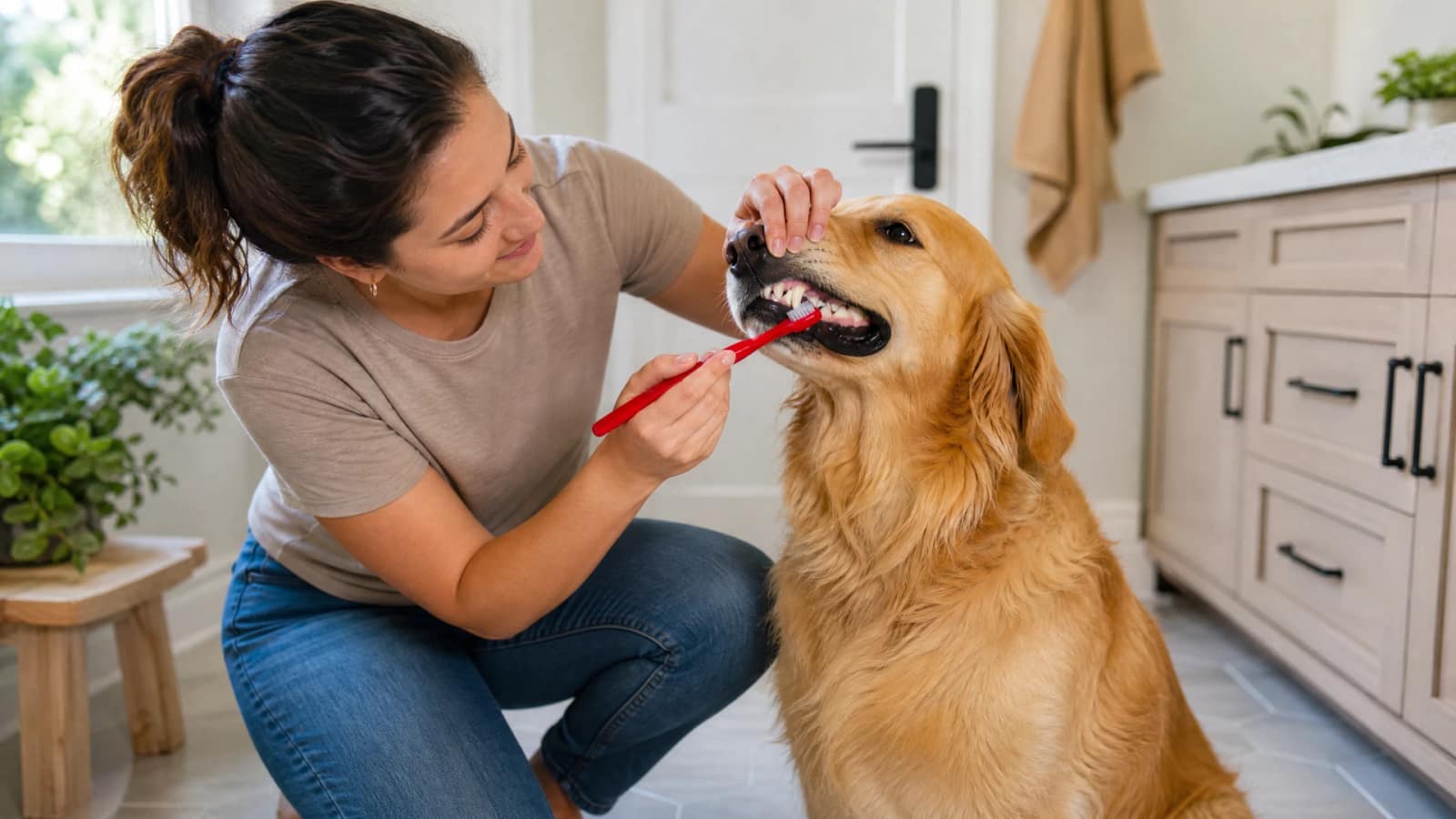
Most dog owners skip dental care until there's a vet bill. By then, the damage is already done. Dental disease doesn't just cause bad breath — it causes pain, tooth loss, and bacteria that enter the bloodstream and damage the heart, kidneys, and liver.
Read guide
Dog Nutrition Guide: What to Feed, What to Avoid, and How to Read a Label
Dog food marketing is designed to appeal to humans, not dogs. Grain-free, raw, holistic, ancestral — these terms are largely unregulated and often misleading. Here's what the science actually says about feeding your dog well.
Read guide