SmartPawsGuides, comparisons & trusted resources — Guides & trusted resources — always independent.

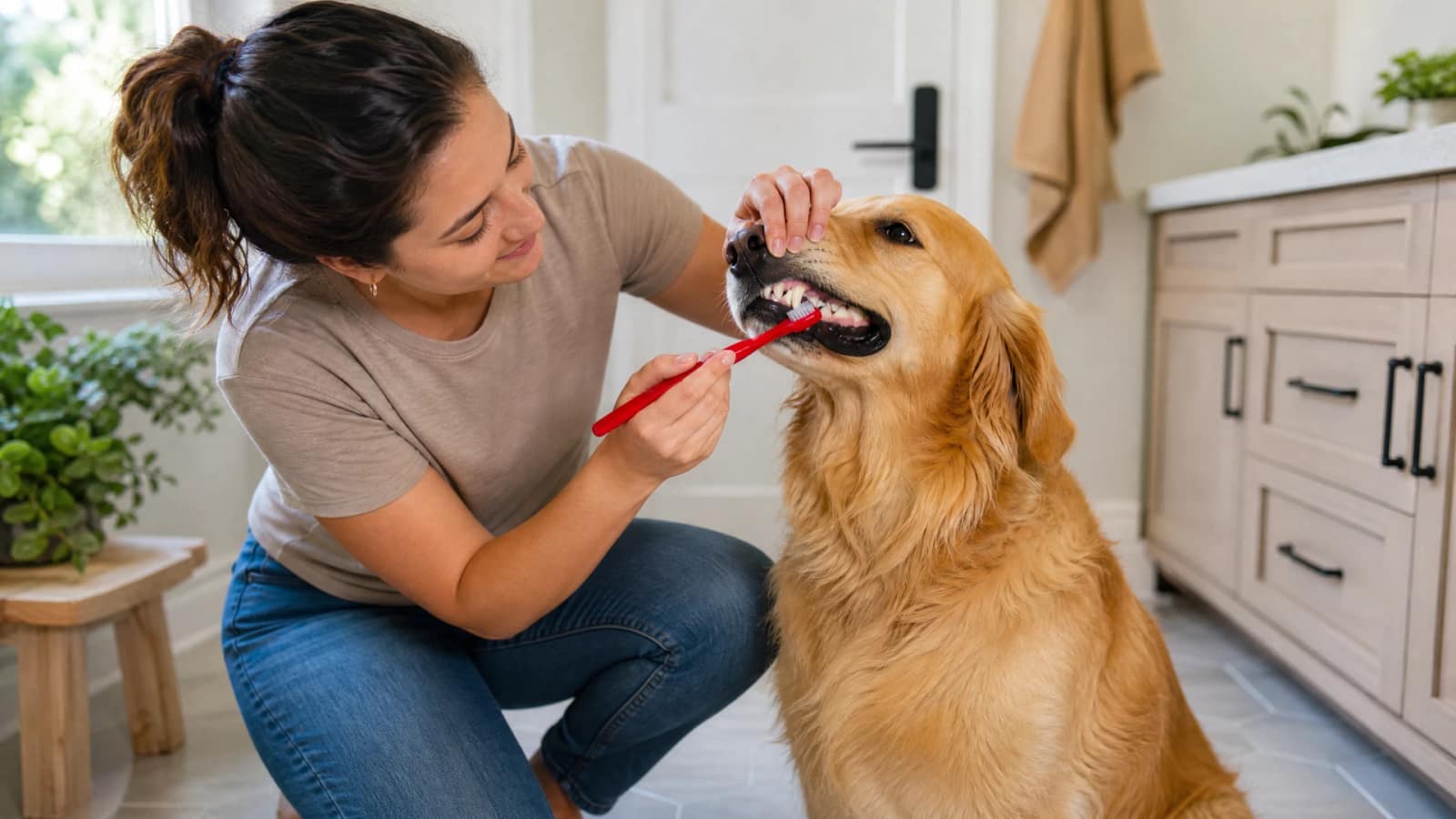
Dog Dental Health: Why It Matters More Than You Think
By John Choi · SmartPaws author
Dental disease affects 80% of dogs by age 3. Here's what it actually causes, what works, and the daily routine that prevents it.
General Education Only
This article is for general educational purposes and does not constitute veterinary advice. Every pet is different — consult your veterinarian before making changes to your pet's diet, health routine, or supplement regimen. If your pet shows signs of illness, contact a licensed veterinarian promptly.
Dental disease is the most common health condition in dogs — and the most preventable. By age 3, 80% of dogs show signs of periodontal disease. Left untreated, it causes chronic pain, tooth loss, and systemic infection that damages the heart, kidneys, and liver. The good news: a consistent daily routine dramatically reduces risk. This guide explains what's actually happening in your dog's mouth, what works, and what doesn't.
What Dental Disease Actually Does
Plaque forms on teeth within 24 hours of eating. If not removed, it mineralizes into tartar within 3–5 days. Tartar harbors bacteria that inflame the gums (gingivitis), then destroy the bone and tissue supporting the teeth (periodontitis). At this stage, bacteria enter the bloodstream through inflamed gum tissue. Studies have linked periodontal disease in dogs to endocarditis (heart valve infection), kidney disease, and liver damage. This is why vets take dental health seriously — it's not cosmetic.
Signs Your Dog Has Dental Disease
Bad breath is the most obvious sign, but it's not the only one. Watch for: reluctance to chew hard food or toys, dropping food while eating, pawing at the mouth, visible brown or yellow tartar buildup on the back teeth, red or bleeding gum lines, and loose or missing teeth. Any of these warrants a veterinary dental exam. Dental disease is painful — dogs are stoic and often don't show pain until it's severe.
What Actually Works: The Evidence
Daily tooth brushing is the gold standard — it's the only method with strong clinical evidence for plaque and tartar prevention. Dental chews (VOHC-approved only) are the best alternative or complement to brushing. Water additives have modest evidence. Dental diets (Hills t/d, Royal Canin Dental) have good evidence. Raw bones carry significant risks (tooth fractures, choking, bacterial contamination) and are not recommended by most veterinary dental specialists. The Veterinary Oral Health Council (VOHC) seal on a product means it has passed clinical trials — look for it.
How to Brush Your Dog's Teeth
Use a dog-specific toothpaste — human toothpaste contains fluoride and xylitol, both toxic to dogs. Start by letting your dog lick the toothpaste off your finger for a few days. Then introduce a finger brush, then a soft-bristled dog toothbrush. Focus on the outer surfaces of the upper back teeth — that's where tartar accumulates fastest. Aim for 30–60 seconds per side. Three times per week is the minimum effective frequency; daily is ideal. Most dogs accept brushing within 2–3 weeks of consistent, positive introduction.
Professional Dental Cleanings
Even with excellent home care, most dogs benefit from a professional dental cleaning every 1–3 years depending on breed, age, and individual tartar accumulation rate. Small breeds and brachycephalic breeds (Bulldogs, Pugs, Shih Tzus) typically need more frequent cleanings due to crowded teeth. Professional cleanings require general anesthesia — this is non-negotiable for a thorough cleaning below the gum line. Anesthesia-free dental cleanings are cosmetic only and do not address subgingival disease.
The VOHC seal is your shortcut: The Veterinary Oral Health Council independently tests dental products for dogs and cats. Products that earn the VOHC seal have clinical evidence of reducing plaque or tartar. Look for it on dental chews, water additives, and dental diets. Greenies, Virbac CET chews, and Hills t/d all carry the VOHC seal.
The Bottom Line
Start brushing your dog's teeth today — even 3 times per week makes a significant difference. Add a VOHC-approved dental chew daily. Schedule a veterinary dental exam if your dog hasn't had one in the past year. The cost of prevention is a fraction of the cost of treating advanced dental disease, and your dog will be in significantly less pain.
Keep reading
You might also like

Crate Training a Puppy: The Complete Step-by-Step Guide
Crate training is one of the most valuable things you can do for a new puppy — but only when done correctly. A rushed or punitive approach creates anxiety. A patient, positive approach creates a dog who genuinely loves their crate.
Read guide
Dog Nutrition Guide: What to Feed, What to Avoid, and How to Read a Label
Dog food marketing is designed to appeal to humans, not dogs. Grain-free, raw, holistic, ancestral — these terms are largely unregulated and often misleading. Here's what the science actually says about feeding your dog well.
Read guide
How Much Exercise Does Your Dog Need? A Breed-by-Breed Guide
A Labrador and a Basset Hound have almost nothing in common when it comes to exercise needs. Getting this wrong in either direction — too much or too little — causes real problems. Here's how to get it right.
Read guide