SmartPawsGuides, comparisons & trusted resources — Guides & trusted resources — always independent.

At-Home Dog Grooming Guide: What You Can Do Yourself (and What to Leave to a Pro)
By John Choi · SmartPaws author
Professional grooming is expensive. Here's what you can handle at home with the right tools and technique — and the tasks that genuinely require a professional.
General Education Only
This article is for general educational purposes and does not constitute veterinary advice. Every pet is different — consult your veterinarian before making changes to your pet's diet, health routine, or supplement regimen. If your pet shows signs of illness, contact a licensed veterinarian promptly.
Grooming is not just cosmetic — it's health maintenance. Regular brushing prevents painful matting, distributes skin oils, and lets you catch skin conditions, lumps, or parasites early. Nail trimming prevents joint pain and posture problems. Ear cleaning prevents infections. This guide covers what you can realistically do at home, what tools you need, and which tasks are genuinely better left to a professional groomer.
Brushing: Frequency by Coat Type
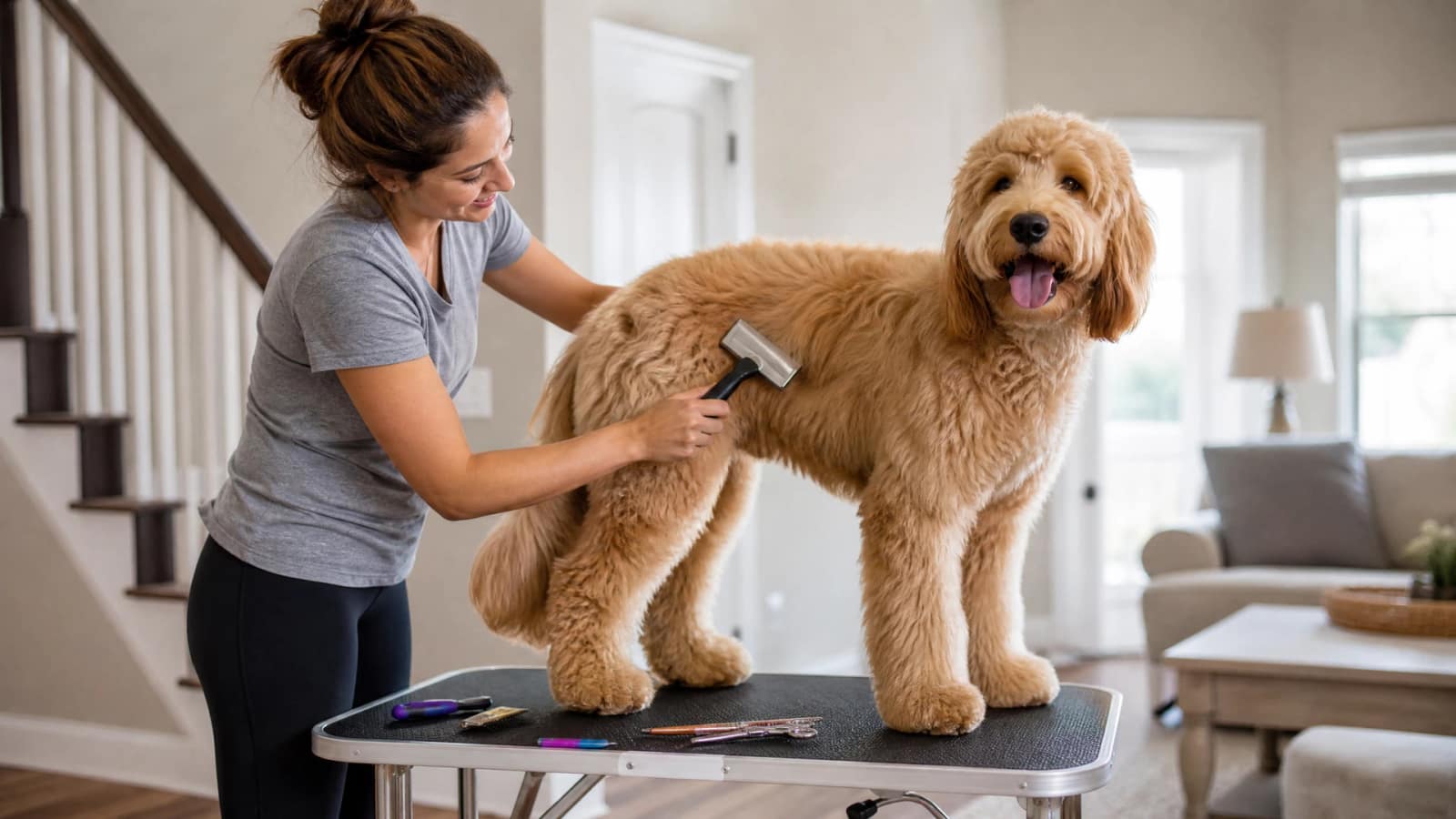
Short-coated breeds (Beagle, Boxer, Labrador) need brushing once a week with a rubber curry brush or bristle brush to remove loose hair and distribute oils. Medium double-coated breeds (Golden Retriever, Husky, German Shepherd) need brushing 2–3 times per week with an undercoat rake and slicker brush — daily during shedding seasons. Long-coated breeds (Shih Tzu, Maltese, Afghan Hound) need daily brushing with a slicker brush and metal comb to prevent matting. Curly or wavy coats (Poodle, Doodles) need brushing every 1–2 days and professional trimming every 6–8 weeks to prevent dense matting.
Nail Trimming: The Most Feared Task
Overgrown nails cause pain, alter gait, and can lead to joint problems over time. Most dogs need nail trimming every 3–4 weeks. The goal is to trim just the curved tip, avoiding the quick — the blood vessel inside the nail. On dogs with light nails, the quick is visible as a pink area. On dark nails, trim small amounts at a time until you see a dark dot in the center of the cut surface — that's the edge of the quick. Keep styptic powder on hand to stop bleeding if you nick the quick. Introduce nail trimming gradually with treats and positive reinforcement.
Ear Cleaning
Healthy dog ears should be pale pink, odor-free, and have minimal visible wax. Clean ears monthly (or more often for floppy-eared breeds prone to infections) using a veterinarian-approved ear cleaner — never water or hydrogen peroxide. Apply cleaner to a cotton ball and wipe the visible inner ear flap and the entrance to the ear canal. Never insert anything into the ear canal. Signs of infection: dark discharge, strong odor, redness, head shaking, or scratching at ears. These require veterinary attention, not home cleaning.
Bathing at Home
Most dogs need bathing every 4–6 weeks unless they get into something. Over-bathing strips natural oils and causes dry, itchy skin. Use a dog-specific shampoo — human shampoo has a different pH and disrupts the skin barrier. Wet the coat thoroughly, apply shampoo from neck to tail, lather for 3–5 minutes, rinse completely — residue causes skin irritation. Dry with a towel and low-heat blow dryer if your dog tolerates it. Never leave a double-coated dog damp — moisture trapped in the undercoat causes hot spots.
What to Leave to a Professional
Dematting severely matted coats should be done by a professional — attempting to brush out tight mats at home is painful and can damage the skin. Breed-specific haircuts (Poodle clips, Schnauzer trims, Cocker Spaniel cuts) require professional skill and equipment. Anal gland expression, if needed, is best done by a vet or groomer. And any dog with significant anxiety around grooming benefits from a professional groomer experienced with anxious dogs.
Start grooming early and often: The most cooperative adult dogs are those who were handled, brushed, and had their paws touched regularly as puppies. Even if your puppy doesn't need much grooming yet, practice the motions — touching paws, looking in ears, handling the mouth — with treats and praise. You're building a lifetime of cooperative grooming.
The Bottom Line
Invest in quality tools — a good slicker brush, undercoat rake, and nail clippers — and build grooming into your weekly routine. Most of the basics (brushing, nail trimming, ear cleaning, bathing) are learnable skills that save significant money over a dog's lifetime. Reserve professional grooming for haircuts, severe matting, and anything that causes your dog significant stress.
Keep reading
You might also like

Crate Training a Puppy: The Complete Step-by-Step Guide
Crate training is one of the most valuable things you can do for a new puppy — but only when done correctly. A rushed or punitive approach creates anxiety. A patient, positive approach creates a dog who genuinely loves their crate.
Read guide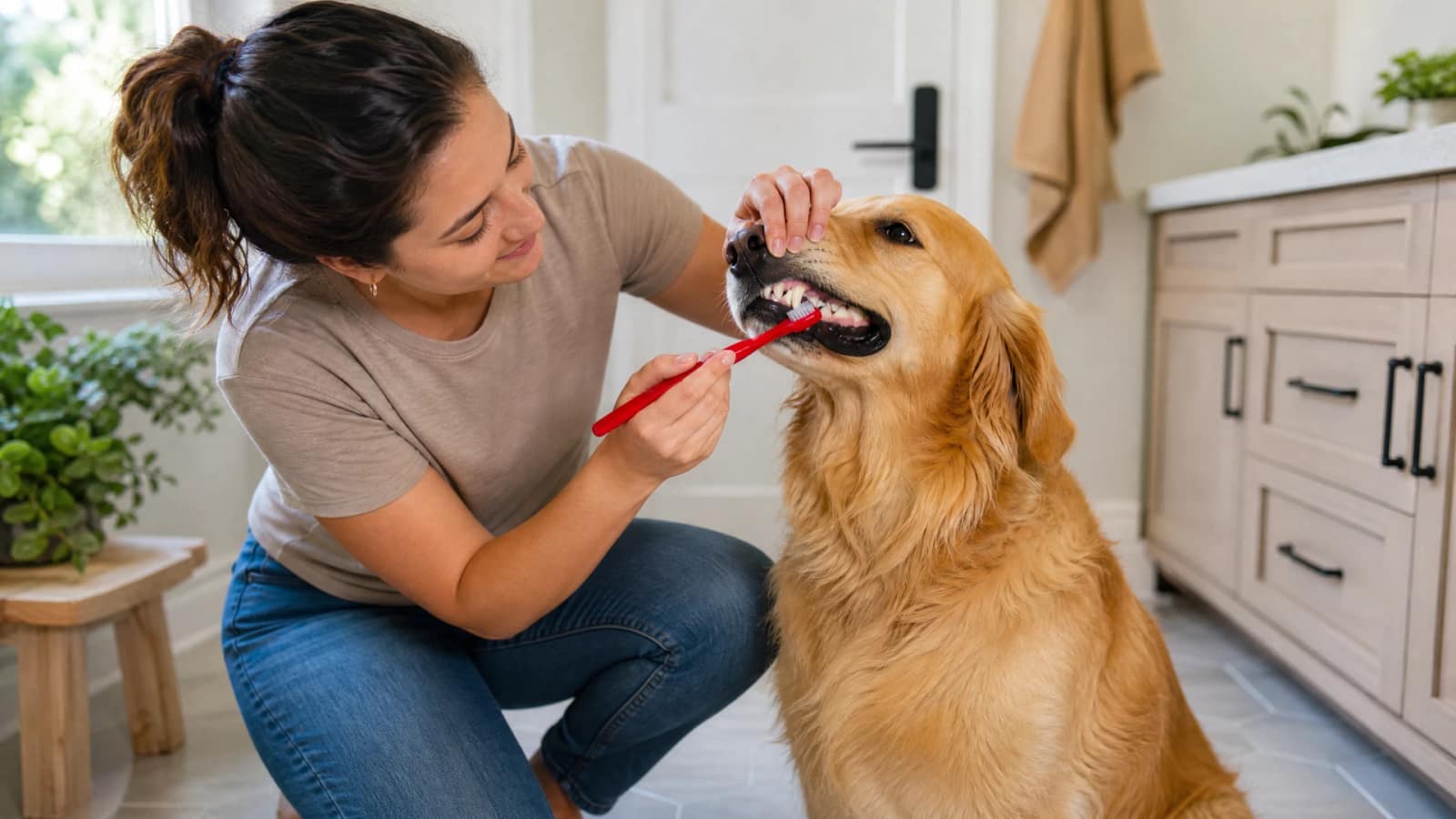
Dog Dental Health: Why It Matters More Than You Think
Most dog owners skip dental care until there's a vet bill. By then, the damage is already done. Dental disease doesn't just cause bad breath — it causes pain, tooth loss, and bacteria that enter the bloodstream and damage the heart, kidneys, and liver.
Read guide
Dog Nutrition Guide: What to Feed, What to Avoid, and How to Read a Label
Dog food marketing is designed to appeal to humans, not dogs. Grain-free, raw, holistic, ancestral — these terms are largely unregulated and often misleading. Here's what the science actually says about feeding your dog well.
Read guide