SmartPawsGuides, comparisons & trusted resources — Guides & trusted resources — always independent.

Ragdoll Training Guide
Docile, affectionate, and wonderfully placid — training a Ragdoll is a gentle partnership built on trust and treats.
Understanding the Ragdoll
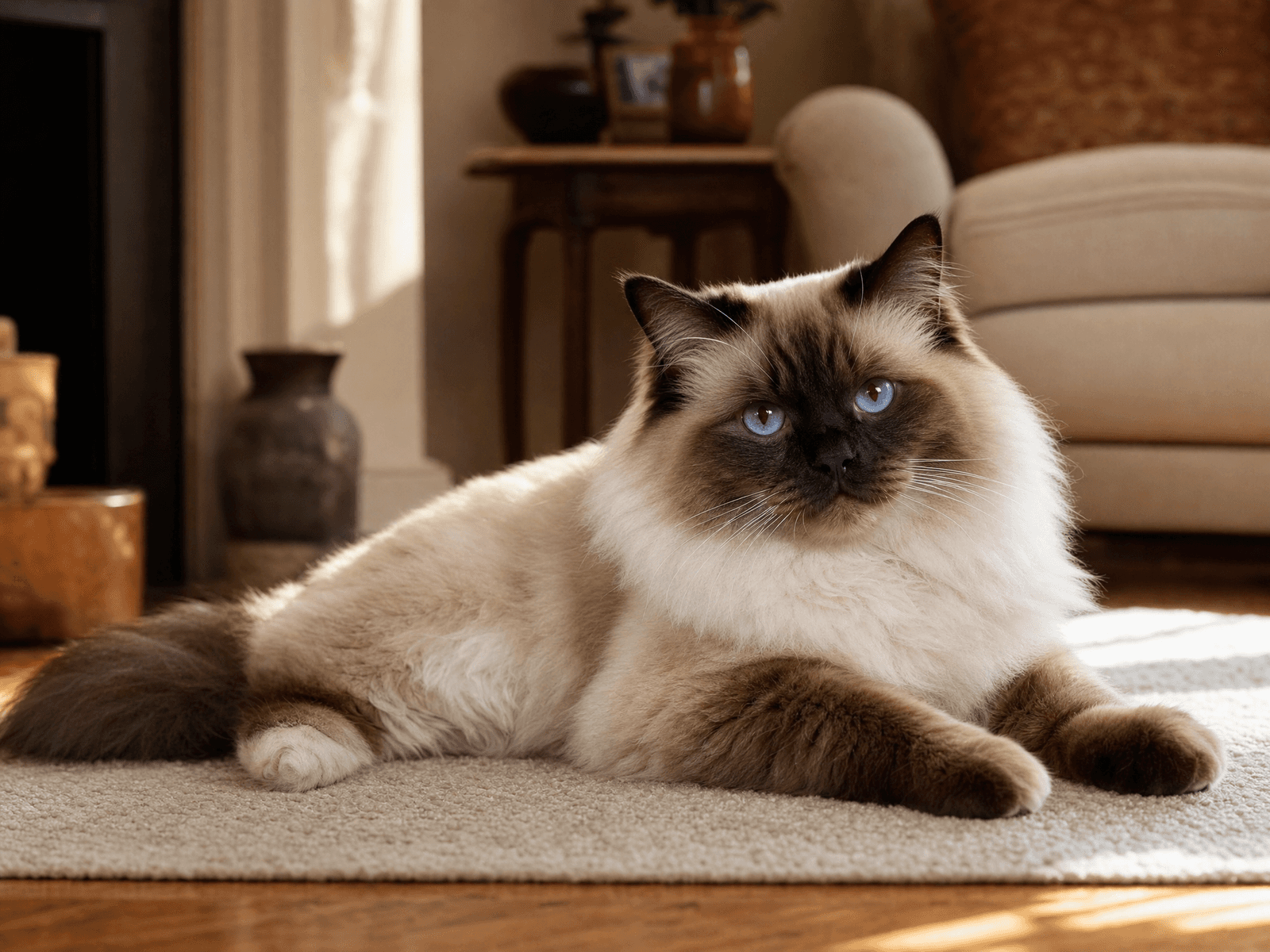
Ragdolls are renowned for their laid-back, affectionate, and placid demeanor, often going completely limp when held—hence their name. Unlike high-strung or fiercely independent breeds, Ragdolls form deep attachments to their human families and thrive on companionship, frequently greeting owners at the door and following them from room to room like a puppy. This strong desire for human interaction makes them exceptionally receptive to positive reinforcement, as they view training sessions as quality bonding time rather than a chore. In terms of motivation style, Ragdolls are predominantly food-motivated, though they also respond exceptionally well to verbal praise and affectionate petting. Their attention span is moderate to good for a feline, allowing for calm, structured sessions without becoming easily frustrated or overstimulated. They possess a remarkably low independence level compared to other cats; they genuinely want to please their humans and prefer being involved in whatever activity is happening nearby. When faced with correction or harsh reprimands, Ragdolls do not respond with aggression or defiance; instead, they can become startled or withdrawn. Positive reinforcement and redirection are essential. What makes Ragdolls truly unique compared to other cats is their high pain tolerance and exceptionally relaxed muscle tone, which contributes to their dog-like devotion. They lack the intense predatory drive or hyperactivity seen in breeds like Bengals or Abyssinians, preferring a calm, harmonious household. This placid nature means training must be kept gentle, patient, and consistent, leveraging their natural desire to be close to you to teach impressive tricks and household manners.
Training Strengths
- ✓Extremely docile and tolerant — rarely react with aggression during handling or training
- ✓Strongly food-motivated — respond enthusiastically to small, high-value treats
- ✓People-oriented and eager to please — view training as positive bonding time
- ✓Moderate attention span — capable of calm, focused learning without frantic distraction
- ✓Low fear response — adapt well to new environments, harnesses, and novel training props
Training Challenges
- ✗Prone to being overly placid or sluggish if sessions are too long or lack engaging rewards
- ✗Slow-maturing breed (take up to 3-4 years to reach full size and maturity), requiring patient, long-term consistency
- ✗May struggle with high-energy agility or jumping tricks due to their heavy, muscular build
- ✗Can become dependent on treats if rewards are not properly faded out over time
- ✗Easily overwhelmed by loud noises or harsh corrections due to their gentle disposition
Commands & How to Teach Them
Come (Recall)
Easy- Stand a few feet away from your Ragdoll and say 'Come' in a warm, encouraging tone.
- Show a high-value treat or shake a treat pouch to capture their attention.
- As soon as your Ragdoll walks or trots toward you, reward them immediately with the treat and gentle praise.
- Gradually increase the distance over multiple sessions until they come from another room.
Sit
Easy- Hold a small treat just above and slightly behind your Ragdoll's nose.
- Slowly move the treat backward over their head, causing their head to tilt up and their hindquarters to lower naturally.
- The moment their bottom touches the floor, say 'Sit', give the treat, and praise them.
- Practice this in short 3-to-5-minute sessions daily until they sit without the full lure.
High Five
Medium- Ask your Ragdoll to sit in front of you.
- Hold a treat slightly above their paw level, just out of reach.
- Wait for them to lift a paw to bat at your hand or the treat.
- The second their paw touches your palm, say 'High Five', immediately release the treat, and praise them enthusiastically.
Stay
Medium- Ask your Ragdoll to sit or lie down.
- Hold your hand up in front of you with your palm facing them and say 'Stay'.
- Wait for one second, then reward them in place with a treat if they haven't moved.
- Gradually increase the duration by a few seconds at a time before releasing them with an 'Okay' cue.
Touch (Target Training)
Easy- Present your index finger or a target stick a few inches from your Ragdoll's nose.
- When they sniff or nudge your finger out of curiosity, immediately click (or say 'Yes') and give a treat.
- Repeat this multiple times until they reliably touch your finger whenever it is presented.
- Use this command to guide your Ragdoll to scale weighing stations, enter carriers, or move across rooms.
Spin
Medium- Hold a treat near your Ragdoll's nose and slowly lure them in a complete circle.
- As they complete the circle, say the command 'Spin'.
- Give them the treat and praise the moment they finish the rotation.
- Fade the luring motion over time into a simple circular hand gesture.
Leash Up
Medium- Lay the harness and leash on the floor and let your Ragdoll sniff them while giving treats.
- Gently drape the harness over their back without buckling it, immediately rewarding them.
- Buckle the harness in a calm environment indoors, letting them wear it for 2 minutes while playing or eating.
- Attach the leash and practice gentle indoor walking before stepping outside.
🚽 Litter Training
Ragdoll kittens naturally take to the litter box with almost no formal instruction due to their innate cleanliness. However, because of their large adult size and long fur, ensure you provide an extra-large, open-top litter box with low sides and easy-to-clean, low-tracking litter. Regularly groom the fur around their hindquarters to prevent litter clinging and maintain impeccable bathroom hygiene.
🦮 Leash & Harness Training
Ragdolls are among the best cat breeds for leash and harness training because of their calm, adaptable temperament and desire to accompany their humans. Introduce the harness indoors in short, positive increments, pairing it with delicious treats to build confidence. Once accustomed, they frequently enjoy supervised outdoor strolls in quiet parks or gardens.
Common Mistakes with Ragdolls
- Rushing training sessions and expecting :
- Using harsh tones or physical correction:
- Forgetting to account for their large si:
- Providing high-calorie treats without re:
- Failing to introduce grooming and harnes:
Frequently Asked Questions
Are Ragdoll cats smart enough to be trained?
Yes! Ragdolls are highly intelligent and observant. While they are not as frantic or high-strung as some active breeds, they love mental stimulation and bond deeply with their owners through positive reinforcement training.
At what age should I start training a Ragdoll kitten?
You can start basic socialization, litter box acclimation, and simple name recognition as early as 8 to 10 weeks old. Keep formal 5-minute training sessions light, fun, and reward-based.
Why does my Ragdoll go limp during training or handling?
Going completely limp is a signature physical trait of the Ragdoll breed when they are held or relaxed. It reflects their deep trust in you and their unique muscle laxity, rather than unresponsiveness or boredom.
Can Ragdolls learn to walk on a leash outside?
Absolutely. Because of their calm and trusting disposition, Ragdolls adapt to harness and leash training much faster than most cats, making them great candidates for supervised outdoor walks.
What are the best treats to use for training a Ragdoll?
Soft, aromatic, and bite-sized protein treats—such as freeze-dried chicken, salmon bites, or lickable purée tubes—work wonders because they provide instant gratification without requiring hard chewing.
Training Fact
Despite weighing up to 20 pounds as adults, Ragdolls are famous for their remarkable 'floppy' muscle relaxation when picked up, which scientists believe stems from a genetic trait of extreme trust and lack of typical feline defensive tension.
Read the full Ragdoll breed profile
Traits, health, costs, and what life with a Ragdoll is really like.