SmartPawsGuides, comparisons & trusted resources — Guides & trusted resources — always independent.

Maine Coon Training Guide
Gentle giants with dog-like intelligence — training a Maine Coon is a rewarding partnership built on curiosity and mutual respect.
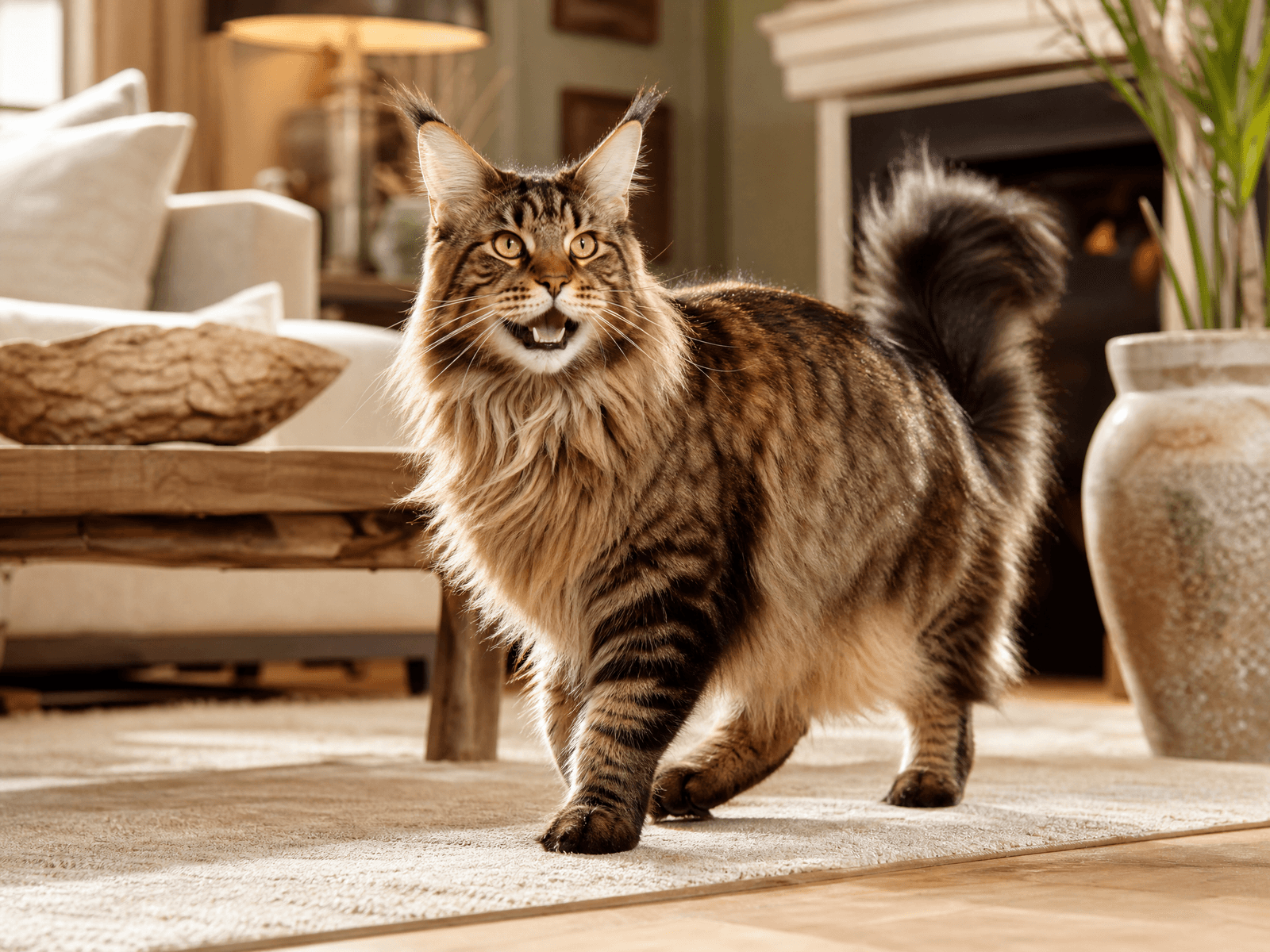
Understanding the Maine Coon
The Maine Coon is famously known as the gentle giant of the cat fancy, possessing a remarkably laid-back, dog-like personality that sets them apart from more aloof feline breeds. Their intelligence is exceptionally high, and they retain a playful, kitten-like demeanor well into their adult years, which provides a long window of receptiveness to training and socialization. Unlike high-strung breeds that startle easily or lose interest quickly, Maine Coons approach new challenges with a steady, curious composure that allows them to process instructions calmly. When it comes to motivation, Maine Coons are overwhelmingly driven by food and interactive play, though they also deeply crave social interaction and human praise. Their attention span is longer than average for cats, enabling them to sustain 5 to 7-minute training sessions without becoming frustrated or distracted. They are moderately independent, enjoying being in the same room as their owners and participating in household activities rather than demanding constant physical contact. Because of their easygoing and resilient nature, harsh corrections or raised voices will shut them down and damage trust; positive reinforcement paired with high-value treats yields extraordinary results. Compared to other breeds, Maine Coons possess a physical and mental robustness that makes them uniquely suited for leash training, puzzle solving, and interactive games like fetch. They are observant problem-solvers who frequently watch human behavior and attempt to mimic it, whether that means opening doors, turning on faucets, or bringing toys back to their owners. This natural inclination toward interaction makes them exceptionally receptive to clicker training and structured routines.
Training Strengths
- ✓Highly food-motivated and eager to earn treats
- ✓Remarkably long attention span for a feline, allowing for extended training sessions
- ✓Gentle, patient temperament that handles new concepts without frustration
- ✓Natural retrieving and carrying instincts, making fetch easy to teach
- ✓High sociability and desire to please human family members
- ✓Exceptional problem-solving abilities and observation skills
Training Challenges
- ✗Size and strength can make accidental rough play or door-opening habits challenging if not redirected
- ✗Prone to boredom if training lacks mental stimulation, leading to self-invented mischief
- ✗Slow physical maturation (taking up to 4 years), requiring patience with physical coordination in young cats
- ✗Can become stubborn or indifferent if sessions become repetitive or boring
- ✗Food motivation can turn into demanding behavior (begging or counter-surfing) if treats are dispensed incorrectly
Commands & How to Teach Them
Sit
Easy- Hold a high-value treat just above and slightly behind your Maine Coon's nose.
- Slowly move the treat backward over their head, encouraging their head to tilt up and back.
- As their head tilts back, their hindquarters will naturally lower into a sitting position.
- The instant their bottom touches the floor, say 'Sit', give the treat, and offer verbal praise.
Come (Recall)
Easy- Choose a distinct auditory cue or clicker sound paired with their name.
- Start at a short distance in a quiet room, show them a treat, and say their name followed by 'Come'.
- Reward them immediately with the treat and enthusiastic praise the moment they reach you.
- Gradually increase the distance and introduce mild distractions over several training sessions.
High Five
Medium- Hold a treat in a closed fist at about chest height in front of your cat.
- Wait for your cat to investigate the fist by lifting a paw to bat or touch it.
- The exact millisecond their paw touches your hand, click or say 'Yes', open your fist, and let them eat the treat.
- Transition to holding an open, flat hand vertical and adding the verbal cue 'High Five'.
Fetch
Medium- Choose a lightweight, textured toy that is easy for a large cat to carry in their mouth, such as a crinkle ball or specialized cat dummy.
- Encourage your cat to bat the toy, then praise them when they pick it up.
- Use a treat to lure them toward you with the toy in their mouth, then offer a trade: treat for toy.
- Gradually throw the toy short distances, rewarding them when they bring it back or drop it near you.
Stay
Medium- Ask your Maine Coon to 'Sit'.
- Open the palm of your hand toward them and say 'Stay' in a calm, firm tone.
- Wait one second, then immediately reward them with a treat while they are still in position, releasing them with an 'Okay' command.
- Gradually increase the duration by a few seconds at a time before delivering the reward.
Leash Walk
Hard- Acclimate your cat to a properly fitted H-style harness indoors by letting them wear it for a few minutes while playing or eating.
- Attach a lightweight leash and allow them to drag it around indoors under supervision so they get used to the trailing weight.
- Hold the leash gently and guide them with treats down hallways or quiet indoor corridors.
- Step outside only after they are completely comfortable moving forward with the harness and leash in secure, quiet outdoor environments.
Target (Touch)
Easy- Present a target stick or your index finger a few inches away from your cat's nose.
- The moment your cat sniffs or touches your finger with their nose, click or say 'Yes' and give a treat.
- Repeat this process multiple times until they reliably reach out to touch your finger immediately.
- Move the target to different angles and distances to guide your cat's movement around the room.
🚽 Litter Training
Maine Coons are naturally immaculate and take to litter box training with almost zero effort during kittenhood. However, due to their impressive adult size—often weighing up to 20 pounds or more—standard commercial litter boxes are frequently too cramped, leading to accidental elimination outside the box. Providing an extra-large box, storage tote, or top-entry setup with plenty of turning room is essential for their long-term litter habits.
🦮 Leash & Harness Training
Maine Coons are among the best feline candidates for leash and harness training due to their confident, adventurous nature and dog-like disposition. Success requires a slow, positive desensitization process indoors using an escape-proof H-style harness and high-value treats before ever stepping foot outdoors. Once accustomed, they often enjoy neighborhood walks and outdoor excursions immensely.
Common Mistakes with Maine Coons
- Using harsh physical corrections or yell:
- Using litter boxes that are too small fo:
- Failing to provide mental stimulation, l:
- Overfeeding treats during training witho:
Frequently Asked Questions
At what age should I start training my Maine Coon kitten?
You can begin basic socialization and clicker training as early as 8 to 10 weeks of age. Maine Coon kittens are mentally mature and highly receptive to learning routines early, though physical stamina increases as they grow.
Are Maine Coons really smart enough to learn tricks like dogs?
Yes. Maine Coons possess exceptional feline intelligence and problem-solving skills. They readily learn commands such as sit, high five, fetch, and walking on a leash, frequently outperforming many dog breeds in trainability.
Why is my Maine Coon refusing to use the litter box even though they were trained?
Maine Coons grow exceptionally large—often reaching significant length and weight by age two. If a trained cat suddenly avoids the box, it is almost always because they have outgrown a standard-sized litter box and need an oversized box or storage container.
How do I prevent my Maine Coon from getting overweight during treat-based training?
To prevent weight gain, use a portion of their daily kibble allowance as training treats or opt for low-calorie, freeze-dried meat treats. Always subtract training calories from their regular daily meal portions.
Training Fact
Maine Coons have water-resistant coats and webbed paws, and many individuals can be easily trained to enjoy supervised water play, paddleboarding, or even safe swimming in shallow lakes—a trait highly unusual for domestic cats.
Read the full Maine Coon breed profile
Traits, health, costs, and what life with a Maine Coon is really like.