
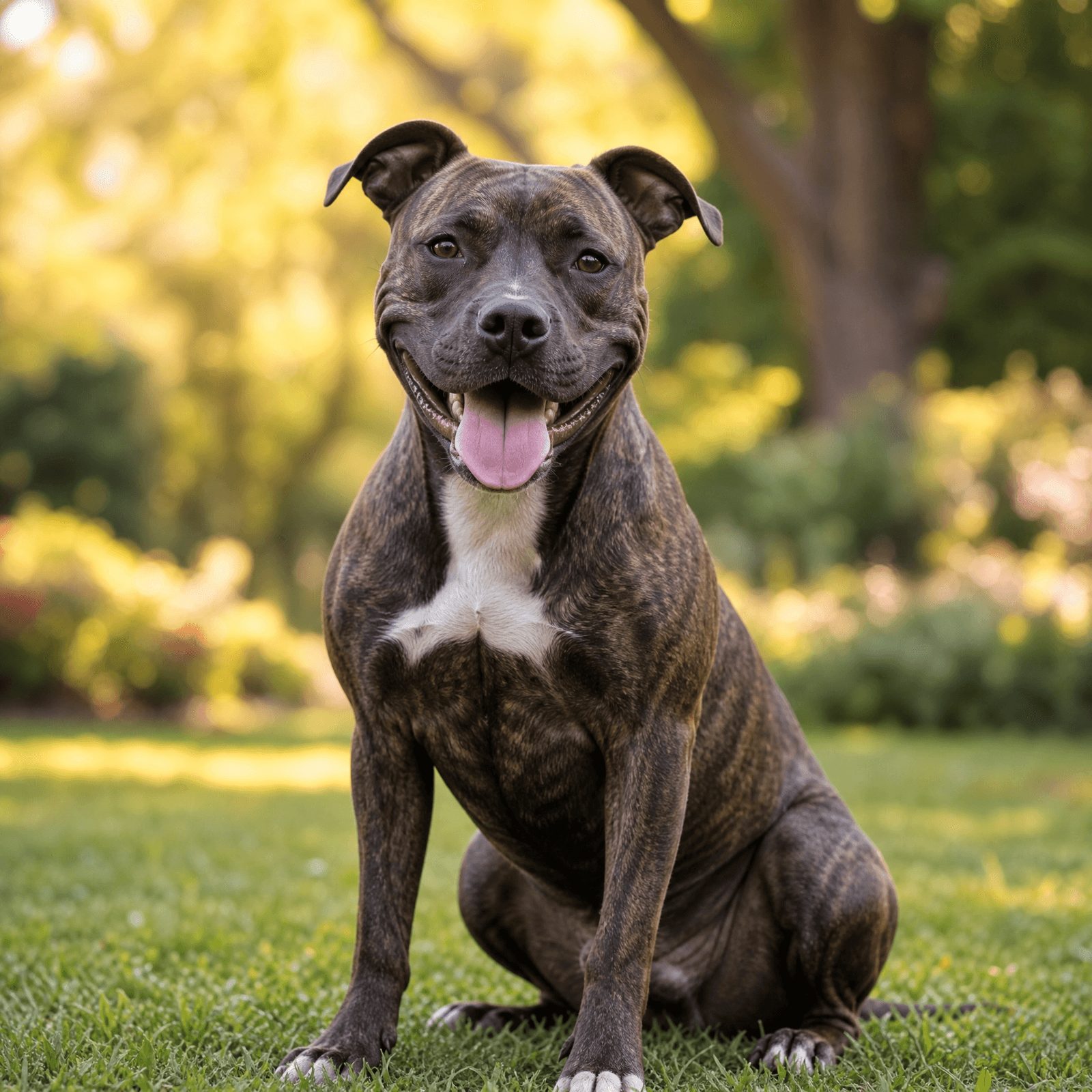
How to Train an American Pit Bull Terrier
Unlocking the incredible potential of an American Pit Bull Terrier or Staffordshire Bull Terrier requires channeling their boundless athleticism and fierce loyalty into structured, positive leadership.
Comprehensive Training Guide: American Pit Bull Terrier & Staffordshire Bull Terrier
Owning and training an American Pit Bull Terrier or Staffordshire Bull Terrier is one of the most rewarding yet intensely demanding journeys in the dog-owning world. These magnificent dogs combine breathtaking athleticism, explosive power, and an unyielding desire to please their human companions with a high sensitivity to handler emotion and a distinct genetic tenacity. Far from the one-dimensional myths that often surround bully breeds, a well-bred and properly trained Pit Bull or Staffordshire Bull Terrier is an affectionate, deeply loyal, highly intelligent athlete capable of excelling in obedience, agility, weight pull, and therapy work.
However, because of their immense physical strength, high prey drive, and stubborn streak rooted in terrier determination, casual or inconsistent training simply does not work. Training an American Pit Bull Terrier or Staffordshire Bull Terrier requires absolute clarity, unwavering consistency, calm assertive leadership, and a deep appreciation for their psychological makeup. This guide provides an honest, expert roadmap to navigating every stage of their development, transforming raw power and enthusiasm into disciplined, polite, and confident canine companionship.
---
1. Breed Training Profile
---
2. Understanding the American Pit Bull Terrier & Staffordshire Bull Terrier Mind
To successfully train an American Pit Bull Terrier or Staffordshire Bull Terrier, you must first understand the genetic engine driving their behavior. Originally developed from bulldog and terrier crosses, these breeds were selected for high physical tenacity, extreme pain tolerance, and a relentless work ethic. While modern breeding has increasingly focused on stable family temperaments, these core psychological traits remain deeply embedded.
First and foremost, these breeds are people-pleasers extraordinaire. Unlike independent primitive hounds or aloof guard dogs, Pit Bulls and Staffords live for their owner's approval. Your voice, your smile, and your emotional state are their primary currency. When you express genuine joy and excitement during training, their enthusiasm skyrockets. Conversely, they are emotional sponges. If you become frustrated, angry, or tense during a session, they will immediately pick up on that stress, leading to shutdown, anxiety, or stubborn resistance.
Second, their motivation profile is heavily anchored in engagement, play, and high-value food. Because of their high prey drive and toy obsession, a tug toy or a ball is often a far more powerful reward than standard kibble. Integrating play as a reward—using the "premack principle," where high-probability behaviors (playing tug) reinforce low-probability behaviors (holding a stay)—is exceptionally effective with this group.
What does not work under any circumstances is physical punishment, harsh corrections, or confrontational dominance training. Because of their high pain tolerance and gameness, physical corrections do not deter unwanted behavior; instead, they escalate arousal, damage trust, and in worst-case scenarios, trigger defensive self-preservation. A Pit Bull or Stafford trained through fear or intimidation becomes an unpredictable, dangerous liability. Success with these breeds is built entirely on clarity, mutual respect, structured impulse control, and early, relentless socialization.
---
3. What Works & What Doesn't
---
4. Training Timeline: The First 6 Months
Navigating the critical developmental window from 8 weeks to 6 months old dictates whether your American Pit Bull Terrier or Staffordshire Bull Terrier matures into a steady, reliable canine citizen or an unmanageable powerhouse.
Month 1 (Weeks 8–12): Foundation & Bonding
Month 2 (Months 3–4): Core Obedience & Impulse Control
Month 3 (Months 4–5): Distraction Proofing & Public Exposure
Months 4–6 (Months 5–6): Adolescent Testing & Advanced Impulse Control
---
5. Essential Commands for American Pit Bull Terriers & Staffordshire Bull Terriers
Mastering these five essential commands is non-negotiable for anyone living with an American Pit Bull Terrier or Staffordshire Bull Terrier. Because of their physical strength and high prey drive, these commands serve as vital safety mechanisms.
1. The Emergency Recall ("Come")
2. The Absolute "Leave It"
3. The "Place" Command (Mental Settling)
4. Loose-Leash Walking ("Heel" with Engagement)
5. The Release Cue ("Break" / "Free")
---
6. The Biggest Challenge: Managing High Arousal and Animal Reactivity
The single hardest training challenge when owning an American Pit Bull Terrier or Staffordshire Bull Terrier is managing and channeling high physiological arousal and genetic dog-reactivity.
Unlike some companion breeds that mature into calm couch potatoes indifferent to other dogs, many bully breeds possess a genetic predisposition toward same-sex intolerance or general dog-selectivity as they reach social maturity (typically between 12 and 24 months of age). Combined with their explosive acceleration and intense play style, this means a casual trip to an off-leash dog park can quickly escalate from rough-and-tumble play into intense friction.
Overcoming this challenge requires abandoning the cultural myth that every dog must be best friends with every other dog. Responsible owners accept their dog's genetic baseline and focus on neutrality rather than enforced socialization.
To successfully manage and overcome high arousal and reactivity, implement the "Look at That" (LAT) game combined with operant conditioning below threshold. Identify the exact distance at which your dog notices another dog without reacting (their threshold). Reward them the instant they look at the trigger and then look back at you. Gradually decrease the distance over weeks and months.
Furthermore, master the art of decompression. High-arousal dogs need structured mental outlets—such as nosework, flirt pole sessions with strict rules, and puzzle toys—that drain mental stamina without spiking adrenaline. By keeping your dog under threshold, managing their environment, and rewarding calm neutrality around other dogs, you transform potential reactivity into quiet, dependable self-control.
---
7. Common Owner Mistakes
1. Relying on Heavy-Handed Correction for Power Management: Because Pit Bulls are physically immensely strong, some owners resort to prong collars, alpha rolls, or physical punishment to control pulling or jumping. This mistake triggers the dog's defensive instincts, escalates arousal, and creates an adversarial relationship that undermines genuine obedience.
2. Assuming Early Puppy Playfulness Equals Lifelong Dog-Sociability: Many owners assume that because their 4-month-old puppy loves playing with every dog at the park, that social openness will remain permanent. When the dog matures at 18 months and exhibits genetic dog-selectivity or intolerance, unprepared owners panic. Successful owners monitor maturity milestones and transition from social parks to structured, controlled one-on-one socialization.
3. Neglecting Mental Stimulation in Favor of Endless Fetch: While fetch tires out a dog's body, it often spikes adrenaline and builds physical stamina without teaching emotional regulation. Owners who only throw balls wind up with an athlete requiring hours of exercise just to stay level. True balance requires combining physical exercise with scent work, impulse control, and obedience drills.
4. Failing to Establish Clear Household Boundaries Early: Because Pit Bull puppies are impossibly cute and affectionate "velvet hippos," owners often tolerate jumping up, mouthing, and resource-guarding on the couch. When that cute puppy weighs 65 pounds of solid muscle, those tolerated habits become dangerous liability issues. Consistent rules from day one are mandatory.
---
8. Frequently Asked Questions (FAQ)
Q1: Are American Pit Bull Terriers harder to train than other large breeds like German Shepherds or Golden Retrievers?
A: They are not necessarily *harder* to train in terms of intelligence—in fact, Pit Bulls and Staffords are remarkably smart and eager to please. However, they are less forgiving of inconsistent training mistakes than Golden Retrievers, and they possess a higher intensity of drive and tenacity than many traditional working breeds. Their training difficulty stems from managing their high arousal, physical strength, and terrier stubbornness, requiring an owner who is both fair and immovably consistent.
Q2: How do I handle my Pit Bull's intense chewing and toy destruction during training?
A: Destructive chewing is rarely simple disobedience; it is usually a combination of teething, high prey drive, and mental boredom. To channel this instinct, provide indestructible rubber chew toys (such as heavy-duty Kongs stuffed and frozen with peanut butter or yogurt) and incorporate interactive play like tug-of-war using specific rules (the dog must out/release the toy immediately on command). Never allow them to chew on household items, and redirect inappropriate chewing instantly to an approved toy.
Q3: My rescue Pit Bull is reactive on leash toward other dogs. Is it too late to train them?
A: It is never too late, but you must shift your goal from "making them love every dog" to achieving "calm, peaceful neutrality." Adult reactivity is managed through systematic desensitization, counter-conditioning below threshold, and teaching an automatic "look at me" check-in behavior whenever a trigger appears. Working with a certified positive-reinforcement behaviorist who understands bully breed dynamics can accelerate progress and ensure safety.
---
References
1. American Kennel Club (AKC). *American Staffordshire Terrier & Staffordshire Bull Terrier Breed Standards and Temperament Overview*. Available online.
2. Dunbar, Dr. Ian. *Barking Up the Right Tree: The Science of Positive Dog Training and Behavioral Development*. James & Kenneth Publishers.
3. McConnell, Patricia B. *The Other End of the Leash: Why We Do What We Do Around Dogs*. Ballantine Books.
4. Overall, Karen L. *Manual of Clinical Behavioral Medicine for Dogs and Cats*. Elsevier Health Sciences.
Quick Reference
Download This Guide
Get the full American Pit Bull Terrier training guide as a PDF.
Training advice reflects general breed tendencies. Individual dogs vary. Consult a certified trainer for persistent behavioral issues.