
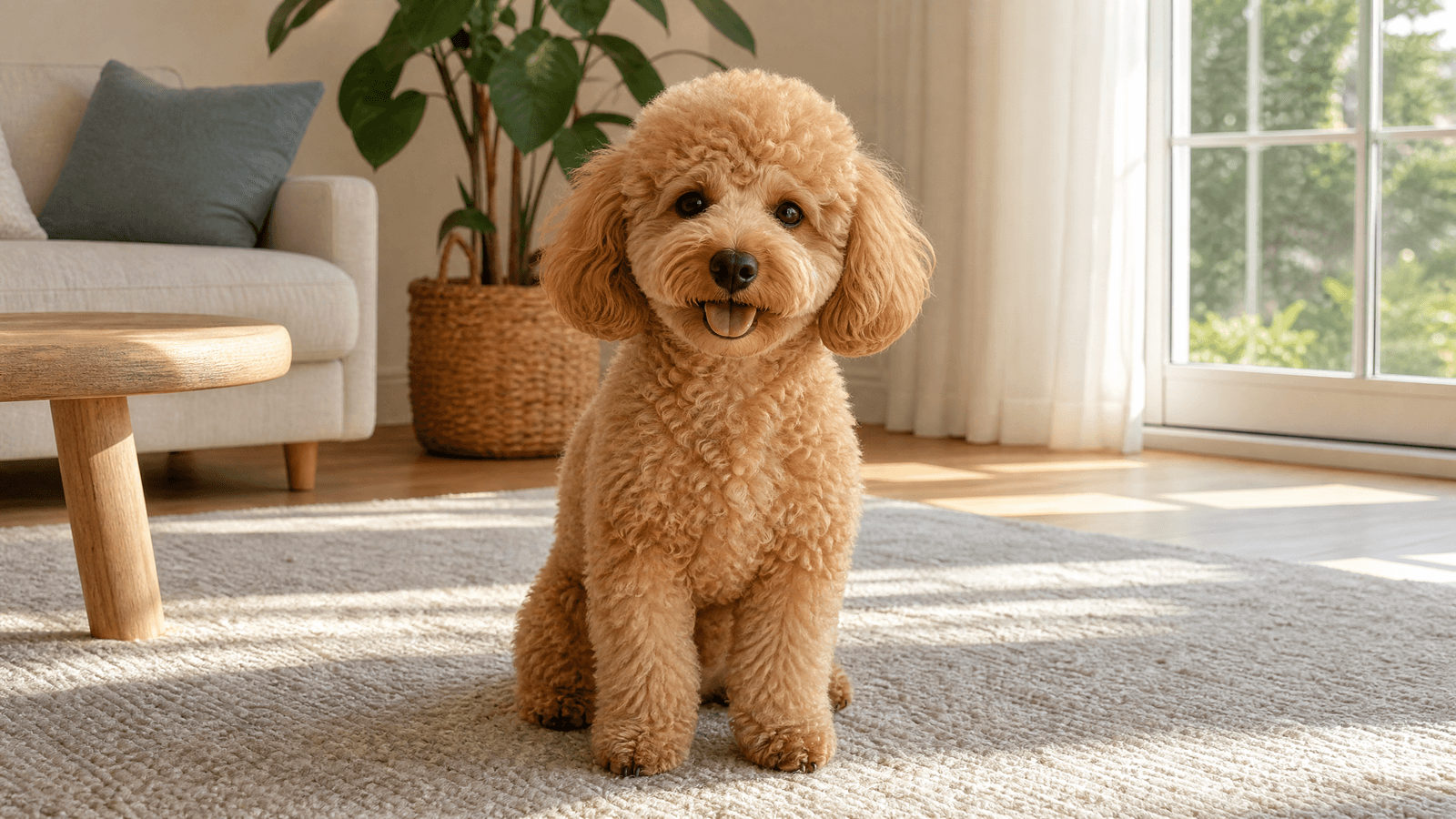
How to Train a Toy Poodle
Beneath the elegant curls and delicate posture of the Toy Poodle lies a miniature genius requiring mental stimulation, firm boundaries, and gentle positive reinforcement to thrive.
The Definitive Toy Poodle Training Guide: Unlocking Brilliant Intelligence and Overcoming Small-Dog Pitfalls
Beneath the elegant, cloud-like curls and delicate aristocratic posture of the Toy Poodle lies one of the sharpest, most agile minds in the entire canine kingdom. Often pigeonholed as mere lapdogs or pampered accessories, Toy Poodles were historically engineered from larger water retrievers—retaining a formidable working drive, boundless curiosity, and an uncanny ability to read human emotion [1] [2]. Training a Toy Poodle is less about forcing obedience and more about channeling a high-performance sports car engine into a miniature chassis. If you provide consistent boundaries, positive reinforcement, and relentless mental stimulation, you will unlock a companion capable of intricate problem-solving, competitive obedience, and profound emotional attunement. However, if you let their diminutive size fool you into abandoning rules, you will quickly find yourself at the mercy of "Small Dog Syndrome," barking, and house-training regressions.
This comprehensive guide breaks down the precise psychological nuances, developmental milestones, and training strategies required to raise a confident, well-adjusted Toy Poodle.
---
Breed Training Profile
---
Understanding the Toy Poodle Mind
To successfully train a Toy Poodle, you must first understand that you are working with a miniature genius trapped in an eight-to-ten-pound body. Ranked second among all dog breeds for working and obedience intelligence, Toy Poodles process commands with breathtaking speed. They learn new cues in fewer than five repetitions and can obey familiar commands on the first attempt over ninety percent of the time [3]. This hyper-intelligence, however, is a double-edged sword. A bored Toy Poodle does not simply sleep on the couch; they invent their own entertainment, which frequently manifests as nuisance barking, counter-surfing, shredding paper, or creative house-soiling.
Psychologically, Toy Poodles are acutely sensitive. They monitor human micro-expressions, vocal tone changes, and body language with laser-like precision. This emotional radar means that traditional, correction-based training methods—such as leash jerks, alpha rolls, or harsh scoldings—are completely disastrous for this breed. A harsh correction does not teach a Toy Poodle what you want; it teaches them fear and distrust. When overwhelmed, a Toy Poodle will either shut down entirely, refusing to engage, or resort to defensive nipping.
What truly motivates a Toy Poodle is relational engagement and high-value rewards. They thrive when training feels like an interactive game of wits. While standard kibble works well for low-distraction indoor sessions, high-value incentives like tiny cubes of freeze-dried liver, soft cheese, or a high-pitched enthusiastic verbal celebration are essential for capturing their focus in stimulating environments. Crucially, Toy Poodles possess an independent working heritage. They were bred to think alongside humans rather than blindly submit to force. Therefore, training must always incorporate autonomy, mental enrichment, and clear communication rather than authoritarian coercion.
---
What Works & What Doesn't
---
Training Timeline: The First 6 Months
Month 1 (Weeks 8–12): Foundation, Bonding, and House-Training Roots
Month 2 (Weeks 12–16): Basic Cues and Environmental Exposure
Month 3 (Weeks 16–20): Impulse Control and Leash Manners
Month 4–5 (Months 4–5): Adolescent Testing and Advanced Focus
Month 6 (Month 6): Solidification and Teen Check-In
---
Essential Commands for Toy Poodles
1. "Look At Me" (Attention Cue)
2. "Leave It" (Impulse Control)
3. "Gentle" (Mouth and Paw Control)
4. "Place" (Mat Training & Boundary Setting)
5. "Recall / Come" (Emergency Lifeline)
---
The Single Hardest Training Challenge: Eliminating "Small Dog Syndrome" Nuisance Barking
The single most challenging hurdle in training a Toy Poodle is overcoming their genetic propensity for vocal vigilance and "Small Dog Syndrome." Because Toy Poodles were bred to alert their owners to disturbances, combined with their sharp eyesight and high reactivity, they frequently develop a chronic nuisance barking habit. When a delivery driver approaches, a neighbor walks down the hallway, or another dog barks outside, the Toy Poodle reacts instantly with high-pitched, piercing alarm barks.
Compounding this is unintentional owner reinforcement. Because Toy Poodles are tiny and physically harmless, owners often laugh, pick them up, or coddle them when they bark, inadvertently teaching the dog that barking summons human attention and praise. Over time, this escalates into chronic demand barking whenever the dog wants food, play, or furniture access.
To overcome this challenge, you must implement a strict management and counter-conditioning protocol:
1. Identify the Trigger Threshold: Observe what sets off the barking and manage the environment (e.g., use frosted window film on low windows or block hallway views with baby gates).
2. Teach a Quiet Cue via Capture: When the dog stops barking naturally, immediately mark the silence with a clicker or word ("Quiet"), followed by a high-value treat.
3. Establish an Alternative Behavior: Train an incompatible behavior, such as running to a designated mat and lying down whenever the doorbell rings, rather than rushing the door.
4. Never Reward Demand Vocalizations: If your Toy Poodle barks for dinner or attention, turn your back, cross your arms, and become a statue. Only engage and reward when absolute silence and calm body posture are achieved.
---
Common Owner Mistakes with Toy Poodles
1. Skipping Socialization Due to Size: Many owners carry their Toy Poodles everywhere or keep them isolated indoors to protect them from the big wide world. This deprives the puppy of vital environmental inoculation, resulting in adult dogs that are fearful, reactive, or aggressive toward strangers and other dogs.
2. Inconsistent House-Training Standards: Because Toy Poodle accidents involve tiny amounts of urine, owners often excuse indoor piddling or rely indefinitely on puppy pads inside living areas. This confuses the dog's elimination substrate rules, making permanent outdoor house-training nearly impossible later in life.
3. Permitting Unchecked Jumping and Lap-Dominance: Allowing a Toy Poodle to aggressively demand lap space, growl when moved from furniture, or jump up on guests because "they are too small to hurt anyone" fosters severe behavioral entitlement and defensive aggression.
4. Using Harsh Vocal Tones for Minor Mistakes: Toy Poodles possess fragile emotional constitutions. Shouting or using severe anger to correct minor accidents causes the dog to become fearful, secretive about eliminating indoors, and reluctant to try new behaviors during training sessions.
---
Frequently Asked Questions (FAQ)
Q: Why is my Toy Poodle struggling with house-training, and how can I fix it?
A: Toy Poodles have small bladders, high metabolisms, and can be easily deterred by cold, wet outdoor weather. To fix stubborn house-training, return to strict crate-and-pen management. Take your puppy outside every 1 to 2 hours, immediately praise and reward elimination within three seconds of finishing, and supervise them 100% of the time when they are loose indoors.
Q: Are Toy Poodles good for first-time dog owners?
A: Yes, provided the owner is committed to mental engagement, positive reinforcement, and consistent boundaries. Their incredible intelligence makes them exceptionally fast learners, but first-time owners must remain vigilant against falling into the trap of permissive "small dog" coddling.
Q: How much exercise does a Toy Poodle actually need?
A: Despite their tiny stature, Toy Poodles are surprisingly athletic and need daily mental and physical stimulation. Two 20-to-30-minute brisk walks combined with interactive puzzle toys, obedience training sessions, and games of indoor fetch are necessary to keep them balanced and prevent destructive boredom.
---
References
1. Stanley Coren, *The Intelligence of Dogs: A Guide to the Thoughts, Emotions, and Inner Lives of Our Canine Companions*, University of Toronto Press, 1994.
2. The Poodle Club of America, *Historical Origins and Working Heritage of the Poodle*, PCA Breed Archives, 2021.
3. American Kennel Club (AKC), *Toy Poodle Breed Standard and Training Guidelines*, AKC Official Publications, 2023.
Quick Reference
Download This Guide
Get the full Toy Poodle training guide as a PDF.
Training advice reflects general breed tendencies. Individual dogs vary. Consult a certified trainer for persistent behavioral issues.