
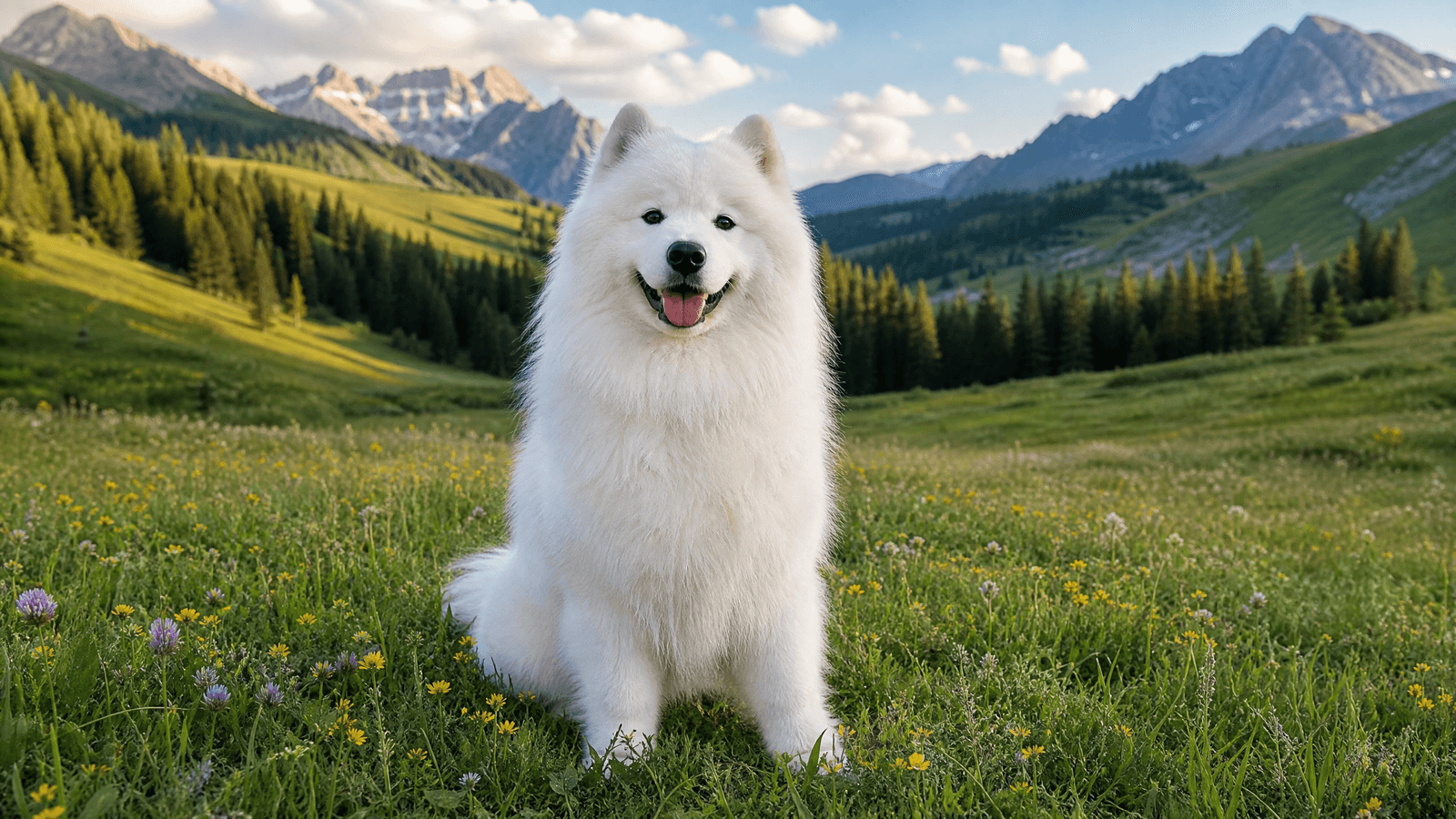
How to Train a Samoyed
Behind that iconic white coat and legendary 'Sammy smile' lies an ancient arctic sled dog whose independent spirit and boundless energy require a diplomatic, positive approach to training.
Training the Samoyed: The Ultimate Guide to Working with the "Smiling" Sled Dog
Behind that iconic, frost-kissed white coat and the legendary "Sammy smile" lies an ancient, intelligent, and fiercely independent arctic working dog engineered to pull heavy loads across frozen tundra in temperatures well below freezing.
Breed Training Profile
---
Understanding the Samoyed Mind
To successfully train a Samoyed, you must first understand the evolutionary history that shaped their psychology. Bred by the nomadic Samoyede people of Siberia, these dogs did not merely work alongside humans; they lived inside nomadic tents, sharing body heat with families in sub-zero conditions and making independent decisions while hauling sleds across treacherous ice fields. This heritage instilled in the Samoyed a profound sense of self-reliance. Unlike herding breeds bred to take constant directional cues from a shepherd, or guard dogs bred to blindly obey perimeter rules, the Samoyed was expected to evaluate situations and problem-solve independently to keep the sled moving forward.
This independence is often misinterpreted by novice owners as sheer stubbornness or a lack of intelligence. In reality, Samoyeds are exceptionally bright—they simply cost-benefit every command you give them. When you ask a Samoyed to sit, their ancient working brain instinctively asks: *What is in this for me, and is this more important than what I am currently sniffing or looking at?* If your answer (the reward or motivation) is not compelling enough, they will politely tune you out. They possess high emotional intelligence and are acutely sensitive to human tone and fairness. Harsh corrections, yelling, or punitive physical discipline do not break a Samoyed's stubborn streak; instead, they shatter the dog's trust, causing the Samoyed to shut down, become defensive, or actively avoid you.
Motivation for a Samoyed revolves around three core pillars: high-value food rewards, engaging interactive play, and the freedom to explore. Because they were bred for endurance rather than explosive speed, long repetitive training sessions will bore them to tears. They thrive on variety, novelty, and upbeat enthusiasm. If training feels like a dreary chore, your Samoyed will invent their own entertainment—often by digging, vocalizing, or trotting off to investigate something more interesting. Understanding that training a Samoyed is a diplomatic negotiation rather than a military dictatorship is the absolute key to unlocking their full potential.
---
What Works & What Doesn't
---
Training Timeline: The First 6 Months
Navigating the first half-year of your Samoyed’s life requires a structured, progressive roadmap that balances early socialization with foundational obedience.
Month 1 (Weeks 8–12): Foundation & Bonding
Month 2 (Weeks 13–16): Household Manners & Leash Basics
Month 3 (Months 4–5): Adolescence Prone & Impulse Control
Months 4–6 (Months 5–6): Teenage Testing & Advanced Distractions
---
Essential Commands
1. "Let's Go" (Loose-Leash Walking)
2. "Leave It" (Impulse Control)
3. "Recall / Come" (Emergency Return)
4. "Quiet" (Vocal Curbing)
5. "Place" (Settle Down / Impulse Control)
---
The Biggest Challenge: Managing Extreme Separation Anxiety & Vocalization
The single hardest training challenge with a Samoyed is managing their profound pack dependency, which frequently manifests as severe separation anxiety paired with persistent, high-pitched vocalization. Samoyeds are intensely social animals. For centuries, they slept huddled together with nomadic families in sub-zero tents; isolation meant certain death in the arctic. Consequently, modern Samoyeds possess an instinctive, hardwired terror of being left alone. When left isolated in a modern apartment or suburban home, this panic triggers frantic howling, barking, pacing, and destructive chewing of doors, window sills, and furniture.
Overcoming this challenge requires a systematic, desensitization protocol starting the very first day you bring your Samoyed home. You must teach your dog that solitude is safe and temporary, not a life-threatening abandonment. Begin by practicing micro-departures: step out of the room for two seconds, close the door, and return *before* the dog starts whining, calmly rewarding quiet behavior. Gradually increase the duration from seconds to minutes, then hours.
Crucially, never make a massive emotional production out of leaving or returning home. Dramatic farewells ("Goodbye sweet baby, mommy will miss you so much!") and ecstatic homecomings ("Oh my goodness, you missed me!") amplify their panic by reinforcing how monumental your absence is. Instead, adopt a calm, nonchalant demeanor when coming and going. Provide high-value interactive puzzle toys (such as frozen Kongs stuffed with peanut butter or yogurt) right as you depart, and pick them up immediately upon your return so they are exclusively associated with your absence. Combine this with plenty of vigorous physical exercise and mental engagement prior to departures so your Samoyed's natural energy is spent resting rather than panicking.
---
Common Owner Mistakes
1. Mistaking Independence for Stupidity and Resorting to Aversive Force: Many owners assume that because a Samoyed does not obey instantly like a German Shepherd, the dog is either stubborn or dim-witted. When the dog ignores commands, frustrated owners resort to yelling, leash jerks, or electronic collars. This is a catastrophic mistake with Samoyeds. Their sensitive, intelligent nature means harsh corrections destroy trust, resulting in a shut-down dog or active avoidance. Success requires patience, fairness, and high-value motivation.
2. Failing to Provide Adequate Physical and Mental Outlets: Owners are often seduced by the Samoyed's fluffy, teddy-bear appearance, assuming they are low-energy lap dogs. In reality, they are working sled dogs with formidable stamina. When their immense energy and clever minds are left unchanneled, Samoyeds invent their own destructive outlets—digging massive craters in the yard, shredding drywall, or howling incessantly. Daily vigorous aerobic exercise (running, hiking, biking) coupled with problem-solving games is non-negotiable.
3. Inconsistent Boundary Setting During Puppyhood: Samoyeds test boundaries during adolescence. Letting your puppy jump on the couch or pull on the leash "just this once" because they look cute teaches them that rules are negotiable. Because Samoyeds are independent thinkers, inconsistent rules create a confused dog who decides to make up their own rules. Clear, unwavering consistency from day one is essential.
4. Neglecting Coat Maintenance Desensitization: That breathtaking white double coat requires intensive weekly grooming (and daily maintenance during shedding season). Owners often wait until the puppy is fully grown and matted before forcing a grueling grooming session, creating a traumatic battle of wills. Desensitizing your Samoyed to brushing, paw handling, and blow-drying with treats from puppyhood ensures a cooperative, stress-free grooming routine for life.
---
FAQ
1. Are Samoyeds difficult to potty train compared to other breeds?
Samoyeds are generally clean dogs by instinct and understand house-training relatively well, provided consistency is maintained. However, because they are sensitive to cold and inclement weather, a puppy may initially hesitate to go outside during winter rain or snow. Owners must bundle up, accompany their puppy outside, throw a celebratory party with high-value treats immediately after successful elimination, and maintain strict crate-training schedules to prevent indoor accidents.
2. Why does my Samoyed "talk" and howl so much, and how do I stop it?
Vocalization is deeply embedded in the Samoyed's working heritage—arctic sled dogs used barks and howls to communicate across vast snowy expanses and signal handlers. While you cannot entirely erase their instinct to "talk," you can manage and shape it through the "Quiet" command, ensuring they are not barking out of severe boredom or separation anxiety. Never yell at a barking Samoyed, as they interpret your voice as joining the chorus; instead, reward quiet, calm behavior consistently.
3. Can I off-leash train my Samoyed safely?
Off-leash training with a Samoyed is notoriously difficult and generally discouraged in un-fenced areas. Their combination of an independent working mindset and a strong prey drive for small wildlife means that if a squirrel or rabbit darts across their path, their instinct to chase overrides verbal commands. Reliable off-leash recall requires hundreds of hours of professional-grade proofing in fully enclosed spaces. For everyday walks, a sturdy long line or secure leash is always the safest choice.
---
References
1. American Kennel Club (AKC). *Samoyed Breed Standard and History*. [https://www.akc.org/dog-breeds/samoyed/](https://www.akc.org/dog-breeds/samoyed/)
2. Coren, Stanley. *The Intelligence of Dogs: A Guide to the Thoughts, Emotions, and Inner Lives of Our Canine Companions*. New York: Bantam Books, 2006.
3. Fogle, Bruce. *The Encyclopedia of the Dog*. New York: DK Publishing, 2013.
4. Serpell, James. *The Domestic Dog: Its Evolution, Behaviour and Interactions with People*. Cambridge University Press, 2015.
Quick Reference
Download This Guide
Get the full Samoyed training guide as a PDF.
Training advice reflects general breed tendencies. Individual dogs vary. Consult a certified trainer for persistent behavioral issues.