
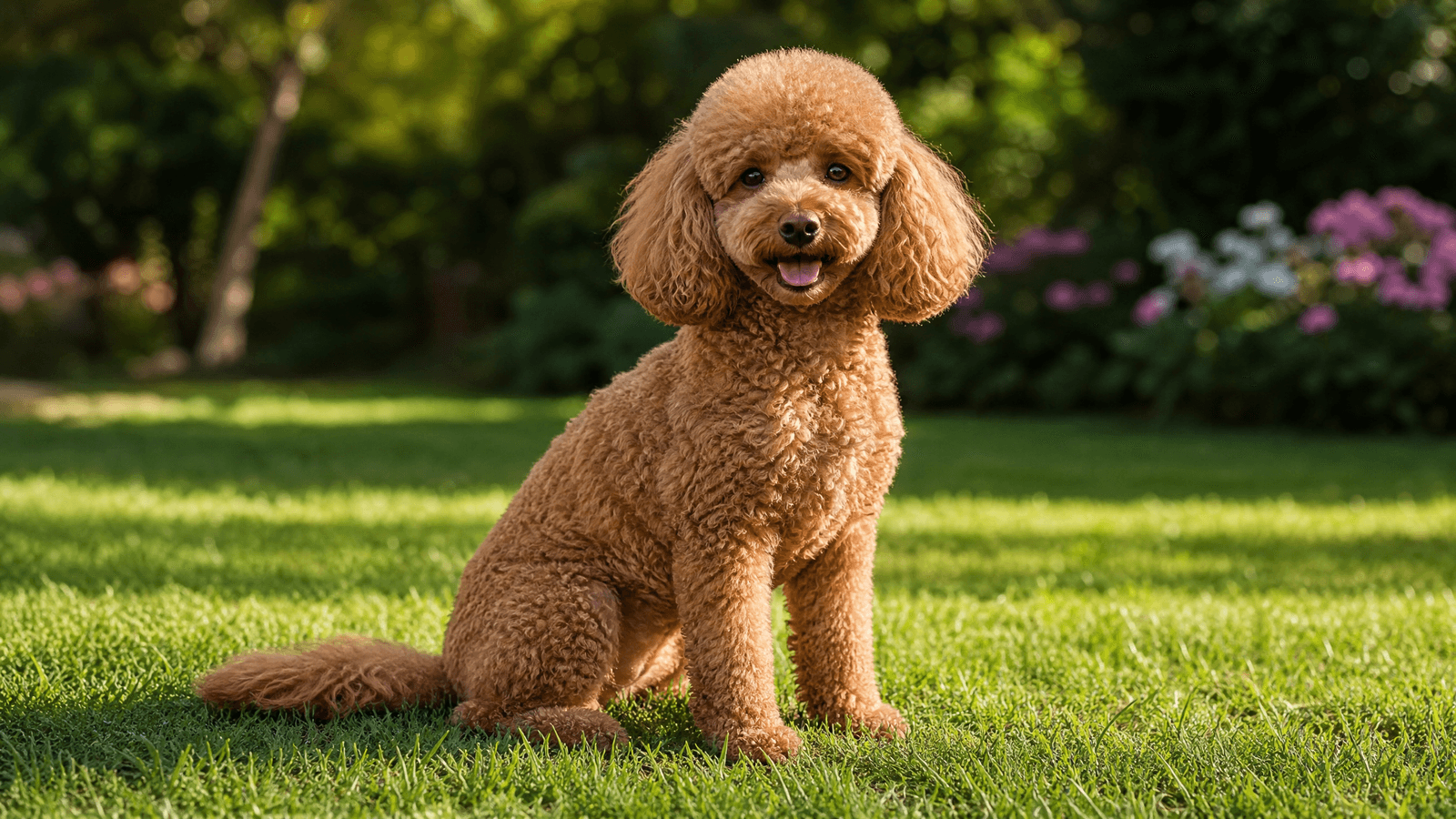
How to Train a Miniature Poodle
Beneath their elegant coats and lively gait lies one of the sharpest minds in the canine kingdom, requiring an owner who matches their brilliance with gentle consistency.
Miniature Poodle Training Guide: Unlocking Smart, Sensitive, and Spirited Potential
Beneath their elegant, perfectly sculpted coats and lively, prancing gait lies one of the sharpest minds in the canine kingdom, requiring an owner who can match their lightning-fast intelligence with gentle consistency and creative mental stimulation.
---
Breed Training Profile
---
Understanding the Miniature Poodle Mind
The Miniature Poodle is a canine prodigy, consistently ranking among the most intelligent dog breeds in the world. Originally bred as water retrievers and later refined as versatile circus performers and aristocratic companions, their brains are wired to analyze human behavior, solve complex puzzles, and anticipate cues before they are even fully spoken. This extraordinary working intelligence is a double-edged sword in a domestic setting: while it means a Miniature Poodle can learn advanced obedience routines and intricate tricks in just a few repetitions, it also means they easily learn unwanted behaviors, such as how to open latches, manipulate family members, or self-reward when bored.
To successfully train a Miniature Poodle, an owner must understand that this breed possesses a delicate, highly sensitive emotional constitution. Harsh corrections, raised voices, or physical reprimands do not teach a Miniature Poodle compliance; instead, they induce anxiety, defensiveness, and a tendency to shut down or avoid training sessions altogether. Their primary psychological motivator is social cooperation and mental engagement. They crave human approval and thrive when sessions feel like a collaborative game rather than a military drill.
What does not work with this breed is repetitive, monotonous drilling. Because their brains process information so rapidly, asking a Miniature Poodle to sit fifty times in a row without variation will quickly result in apparent stubbornness or willful distraction. In reality, the dog is not being defiant—they are simply experiencing cognitive boredom. Motivation must be maintained through variable reward schedules, high-value treats, toy rewards, and dynamic environmental setups. Furthermore, Miniature Poodles are hyper-attuned to household tension and emotional shifts. If an owner approaches a training session with frustration or impatience, the dog will mirror that stress, leading to an unproductive feedback loop. Success with the Miniature Poodle relies entirely on patience, emotional stability, inventive mental challenges, and absolute consistency.
---
What Works & What Doesn't
---
Training Timeline: The First 6 Months
Month 1 (Weeks 1–4): Foundation & Bonding
Month 2 (Weeks 5–8): Basic Manners & Bite Inhibition
Month 3 (Weeks 9–12): Expansion & Distraction Proofing
Month 4 (Weeks 13–16): Adolescent Testing & Intermediate Cues
Month 5 (Weeks 17–20): Advanced Integration & Public Manners
Month 6 (Weeks 21–24): Adolescence & Consistency
---
Essential Commands
1. "Watch Me" (Attention & Focus)
2. "Place" (Impulse Control & Settling)
3. "Leave It" (Safety & Resource Protection)
4. "Wait" vs. "Stay" (Threshold Management)
5. "Recall / Come" (Reliable Return)
---
The Biggest Challenge: Managing Alert Barking & Sensitivity
The single greatest training hurdle encountered with the Miniature Poodle is managing their innate tendency toward excessive alert barking coupled with an underlying emotional sensitivity. Miniature Poodles possess sharp hearing and a deeply observant nature; they notice every shifting shadow, distant car door, or passing neighbor. Because they were historically bred to act as watchdogs and versatile farm helpers, their default reaction to novel environmental stimuli is vocalization. They bark to announce visitors, express boredom, or alert their owners to changes in their domain.
Compounding this challenge is the breed's exquisite emotional sensitivity. When owners attempt to correct alert barking using harsh reprimands, shouting, or physical punishment, the Poodle does not interpret the reaction as a lesson in silence. Instead, they perceive the owner's raised voice as an escalation of excitement or, worse, a threat. This induces anxiety, causing the dog to bark even more out of nervous tension or distress. Over time, an improperly handled barking issue can morph into generalized reactivity, stranger wariness, or separation-related vocalization.
Overcoming this challenge requires a two-pronged strategy: proactive environmental management and positive reinforcement for quiet behavior. First, owners must minimize visual triggers by blocking access to windows where the dog acts as a perpetual sentry. Second, rather than punishing the bark, owners should utilize a "Thank You" protocol. When the Poodle barks at a noise, the owner calmly walks to the window, acknowledges the trigger with a phrase like "Thank you, I see it," and lures the dog away to a designated mat with a high-value treat. This validates the dog's instinctual desire to alert while teaching them that their duty is fulfilled after a single notification, allowing them to relax and redirect their brilliant minds to calmer pursuits.
---
Common Owner Mistakes
1. Assuming Intelligence Equals Obedience Out of the Box: Many owners make the mistake of believing that because a Miniature Poodle learns a trick in three repetitions, they are fully trained. Intelligence provides the *capacity* to learn quickly, but generalization and impulse control require structured, consistent repetition across various environments.
2. Failing to Provide Mental Stimulation: Treating a Miniature Poodle like a low-energy couch potato leads to severe cognitive frustration. When their brilliant minds are left unstimulated, Poodles invent their own jobs—typically involving destructive chewing, counter-surfing, or nuisance barking.
3. Using Aversive Methods That Trigger Anxiety: Relying on intimidation, shock collars, or harsh physical corrections destroys the delicate trust between owner and Poodle. Because the breed is emotionally sensitive, aversive training causes them to shut down, become fearful, or develop unpredictable avoidance behaviors.
4. Enabling Over-Attachment and Separation Anxiety: Because Miniature Poodles bond intensely with their human families, owners often encourage constant shadowing and never teach the dog how to be alone. This leads directly to severe separation anxiety when the owner leaves the house.
---
Frequently Asked Questions
Are Miniature Poodles difficult to house train?
Miniature Poodles are generally intelligent and clean dogs, which helps them grasp house training relatively quickly if placed on a consistent schedule. However, because they are sensitive to cold weather and rain, they may attempt to avoid going outside during inclement weather, leading to indoor accidents if owners are not vigilant. Using a covered outdoor area and rewarding successful outdoor elimination immediately will resolve this hurdle.
Do Miniature Poodles get along well with children?
Yes, Miniature Poodles can make exceptional family companions for children, provided the children are taught to handle the dog with respect. Because Miniature Poodles are relatively small and refined, rough play or heavy-handed handling can easily injure them or trigger fear-based defensiveness. Supervised, gentle interactions build wonderful, affectionate bonds between Poodles and kids.
How much exercise does a Miniature Poodle actually need?
Despite their dainty appearance, Miniature Poodles are athletic, energetic dogs that require daily physical and mental exercise. A combination of brisk daily walks, off-leash fetch sessions in an enclosed area, and interactive puzzle toys is necessary to keep them physically fit and mentally satisfied. Without adequate outlets, their high energy can manifest as anxious or destructive behaviors at home.
---
References
1. Stanley Coren, *The Intelligence of Dogs: A Guide to the Thoughts, Emotions, and Inner Lives of Our Canine Companions*, University of British Columbia.
2. American Kennel Club (AKC), *Miniature Poodle Breed Standard and Training Overview*, [https://www.akc.org/dog-breeds/miniature-poodle/](https://www.akc.org/dog-breeds/miniature-poodle/)
3. Patricia McConnell, *The Other End of the Leash: Why We Do What We Do Around Dogs*, Ballantine Books.
Quick Reference
Download This Guide
Get the full Miniature Poodle training guide as a PDF.
Training advice reflects general breed tendencies. Individual dogs vary. Consult a certified trainer for persistent behavioral issues.