
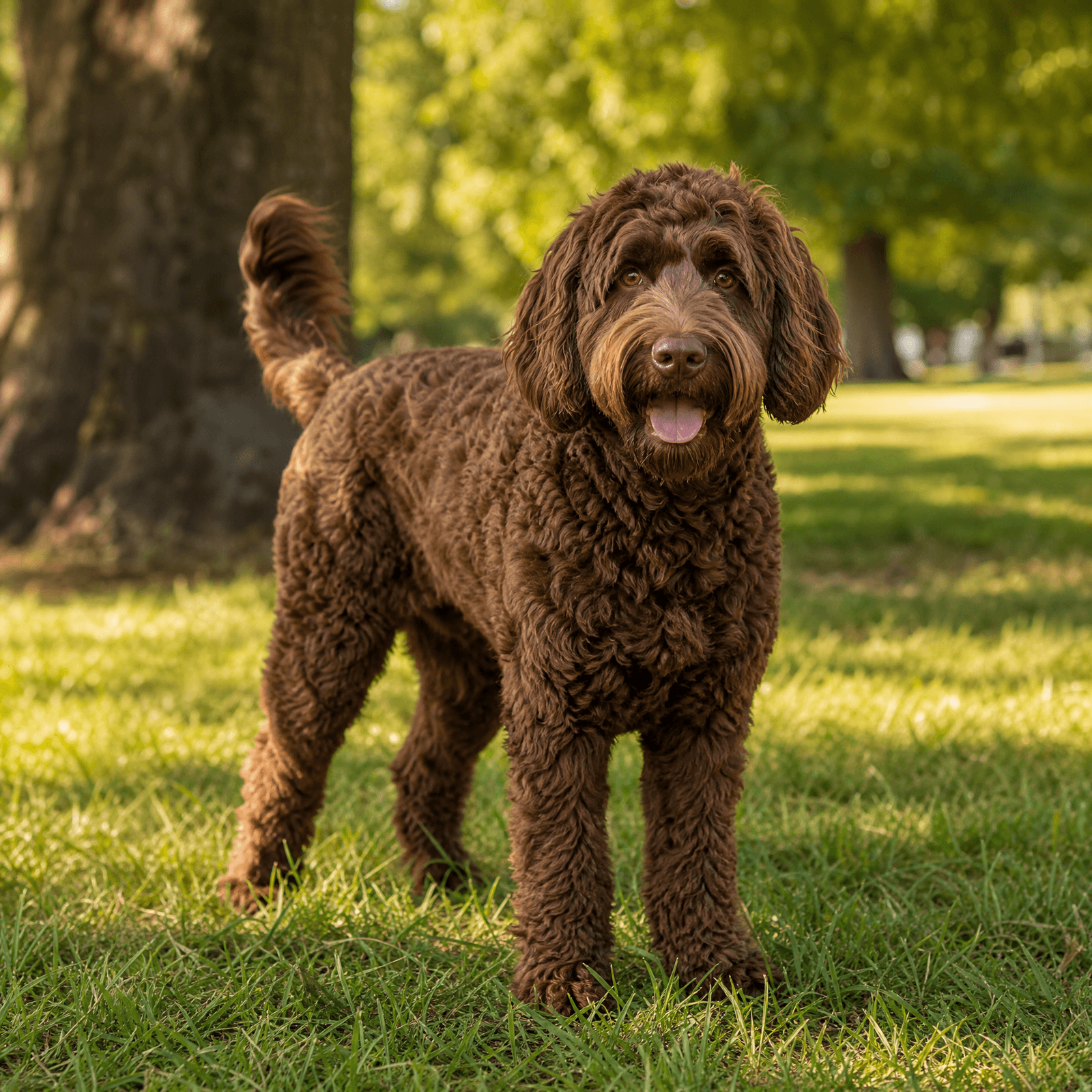
How to Train a Labradoodle
Blending the relentless enthusiasm of the Labrador Retriever with the razor-sharp intellect of the Poodle, the Labradoodle is a powerhouse of affection and energy that thrives on thoughtful, positive guidance.
The Complete Labradoodle Training Guide
Blending the relentless enthusiasm of the Labrador Retriever with the razor-sharp intellect of the Poodle, the Labradoodle is a powerhouse of affection and energy that thrives on thoughtful, positive guidance.
1. Breed Training Profile
---
2. Understanding the Labradoodle Mind
To successfully train a Labradoodle, one must first understand the fascinating genetic convergence that creates this beloved hybrid. The Labradoodle is not a standardized purebred dog with centuries of fixed behavioral traits; rather, it is a cross between two distinct working and sporting giants: the Labrador Retriever and the Poodle. This dual heritage means that Labradoodles inherit a complex cocktail of instincts, drives, and cognitive styles. From the Labrador side comes a deep-seated retriever drive, an infectious enthusiasm for physical interaction, an oral fixation (the strong urge to carry objects in their mouths), and a sometimes overly exuberant greeting style. From the Poodle side comes hyper-vigilant intelligence, exceptional problem-solving capabilities, acute sensitivity to human emotional tones, and a propensity for overthinking if left without clear leadership.
What makes the Labradoodle unique to train is the sheer speed at which their brains operate. They learn new behaviors with astonishing swiftness, often mastering a command in just three to five repetitions. However, this same intelligence can become a double-edged sword. If training sessions are repetitive, boring, or overly mechanical, a Labradoodle will quickly figure out how to outsmart the handler, offer unwanted behaviors for attention, or simply disengage. Their psychology is entirely centered around partnership and engagement. They do not respond well to traditional, dominance-based compulsion training or harsh corrections. Aversive methods shatter the trust between handler and dog, causing sensitive Poodle-mixes to shut down, become anxious, or develop defensive reactivity.
Instead, Labradoodles are exclusively motivated by cooperative engagement, high-value rewards, social praise, and interactive play. They crave mental work just as much as physical exercise. When a training session incorporates novelty, variable schedules of reinforcement, and problem-solving puzzles, the Labradoodle transforms from a bouncing ball of chaotic energy into an attentive, eager student. Understanding that your Labradoodle is constantly evaluating your consistency and emotional state is the foundational key to unlocking their full potential.
---
3. What Works & What Doesn't
---
4. Training Timeline: The First 6 Months
Navigating the first half-year of a Labradoodle's life requires balancing their rapid physical growth with their developing cognitive abilities. Because different coat types and sizes (Miniature, Medium, Standard) exist within the Labradoodle spectrum, physical maturity rates can vary, but foundational behavioral milestones remain consistent.
Month 1 (Weeks 8–12): Foundation, Bonding, and Socialization
Month 2 (Months 3–4): Basic Obedience and Impulse Control
Month 3 (Months 4–5): Adolescence Warning and Distraction Proofing
Months 4–6: Teenage Testing and Advanced Refinement
---
5. Essential Commands for Labradoodles
While all basic commands are necessary, five specific commands carry heightened importance for the Labradoodle due to their unique genetic blend of high energy, retriever instincts, and sensitive intellect.
1. "Leave It" (Managing the Retriever Drive)
2. "Off" (Managing Exuberant Greeting Behaviors)
3. "Place" (Managing High-Energy Pacing and FOMO)
4. "Drop It" (Safe Exchange of Retrieved Items)
5. "Look At Me" (Mental Re-centering and Focus)
---
6. The Biggest Challenge: Combating Separation Anxiety and Over-Attachment
The single greatest training hurdle encountered by Labradoodle owners is the breed's profound propensity for separation anxiety and intense over-attachment. Because both parent breeds—Labradors and Poodles—were historically bred to work in close physical and emotional proximity to humans, the resulting hybrid is intensely social. Labradoodles do not merely like their owners; they view themselves as functional extensions of your physical body. They are the ultimate "Velcro dogs," infamous for following you from room to room, lying across your feet while you work, and watching you intently from behind the bathroom door.
While this unwavering devotion is endearing, it creates a fragile emotional foundation when the dog is left alone. When a Labradoodle experiences sudden isolation, their high Poodle intellect goes into overdrive, interpreting your departure not as a temporary inconvenience, but as an existential crisis. This manifests as relentless howling, frantic scratching at doors, chewing window sills, self-mutilating licking paws, or soiling pristine carpets despite being fully house-trained.
Overcoming this challenge requires systematic desensitization and independence building from day one. Owners must actively teach their Labradoodle that being alone is safe, normal, and temporary. This is accomplished through desensitization to departure cues—picking up keys, putting on shoes, and touching the front doorknob repeatedly without actually leaving, thereby neutralizing those anxiety-inducing triggers. Furthermore, owners must establish physical boundaries in the home, such as using baby gates or utilizing the "Place" command so the dog learns to be relaxed in a room while the owner is temporarily out of sight. By fostering confidence and independent problem-solving skills, you prevent the crippling codependency that ruins countless Labradoodle-owner relationships.
---
7. Common Owner Mistakes
1. Treating All Labradoodles as Identical F1 Crosses: Many owners fail to understand genetic variation. An F1 Labradoodle (50% Labrador, 50% Poodle) behaves very differently from an F1B (75% Poodle) or a multi-generational Labradoodle. Owners with high-percentage Poodle mixes often miscalculate their dog's mental sensitivity and need for complex cognitive stimulation, while owners with high-percentage Labrador mixes underestimate raw physical power and oral fixation.
2. Neglecting Professional Grooming Desensitization: Because Labradoodles often possess complex, non-shedding fleece or wool coats that intertwine easily, they require intense daily brushing. Many owners make the mistake of only brushing the surface while leaving dense matting near the skin. When the dog must be shaved down at the groomer due to neglect, the traumatic experience makes future grooming sessions a battleground.
3. Assuming Physical Exercise Replaces Mental Training: Owners often believe that a 45-minute game of fetch in the backyard is sufficient. However, because Poodles were bred for complex hunting tasks and Labradors for stamina, physical exertion alone leaves a Labradoodle physically fit but mentally bored. A physically exhausted dog with a bored brain will invent its own destructive entertainment, such as counter-surfing or digging up landscaping.
4. Giving In to Whining and Vocal Manipulation: Labradoodles are highly vocal communicators, utilizing whines, grunts, and melodic sighs to express desires. Well-meaning owners frequently reinforce this by turning around to look at the dog, speaking to them, or giving them what they want the moment they vocalize. This inadvertently trains the dog that whining is an effective remote control for human behavior.
---
8. Frequently Asked Questions (FAQ)
1. Why is my adolescent Labradoodle suddenly ignoring commands they mastered months ago?
Adolescence in Labradoodles typically strikes between 6 and 18 months of age (depending on their size variety). During this window, hormonal surges trigger significant brain rewiring and synaptic pruning. Behaviors that were previously reliable may temporarily disintegrate as your dog tests boundaries and explores newfound independence. The solution is not to abandon your training methods, but to double down on consistency, lower your expectations temporarily, return to high-value reinforcement, and maintain strict management until they pass through the adolescent threshold.
2. How do I stop my Labradoodle from relentlessly nipping and mouthing guests' hands?
Mouthing is a byproduct of their Retriever heritage combined with puppy exploratory behavior. When visitors arrive, your Labradoodle's excitement spikes their arousal, triggering their instinct to grab something—which unfortunately is often human hands or sleeves. To fix this, train a strict "Go to your Place" protocol whenever the doorbell rings. Instruct guests to ignore the dog entirely until all four paws are grounded and calm. Keep a basket of sturdy chew toys near the front door so you can immediately redirect the dog's oral drive into an acceptable object before greeting guests.
3. Why does my Labradoodle's coat type keep changing, and how does it affect their grooming training?
Because Labradoodles are hybrid crosses, litters—and even individual puppies—can exhibit three distinct coat types: hair coats (resembling Labradors, shedding moderately), fleece coats (wavy or loose curls, low shedding), and wool coats (tight poodle curls, non-shedding). Coat transitions frequently occur around 6 to 9 months of age as puppy fur gives way to adult coats. During this transitional shedding window, mats form with terrifying speed. You must introduce slicker brushes and metal greyhound combs into your daily handling routine early, pairing every stroke with high-value treats so your dog learns to associate grooming maintenance with relaxation and reward.
Quick Reference
Download This Guide
Get the full Labradoodle training guide as a PDF.
Training advice reflects general breed tendencies. Individual dogs vary. Consult a certified trainer for persistent behavioral issues.